
Florida’s Atlantic coastline is famous for its miles of sandy beaches, but some of the Sunshine State’s most beautiful swimming experiences are found in rather unexpected places: blue-water swimming spots.
A short journey inland can take you from the Atlantic surf to crystal-clear freshwater springs, where the water remains a refreshing 72 degrees throughout the year. Elsewhere, unusual coastal formations create sheltered swimming areas, while natural spring runs provide the setting for one of Florida’s most enjoyable family adventures.
The secret is that not all beautiful blue water in Florida comes from the ocean. Some of the clearest water emerges from underground aquifers, creating extraordinary natural swimming environments surrounded by subtropical vegetation.
For families exploring Florida’s Atlantic Coast, these three destinations offer something rather different from an ordinary beach day. One is famous for its winter gatherings of manatees, another has a surprisingly sheltered swimming cove beside a major Atlantic inlet, and the third offers the chance to float along a naturally flowing freshwater stream.

1. Blue Spring State Park: Crystal-Clear Water and Winter Manatee Encounters
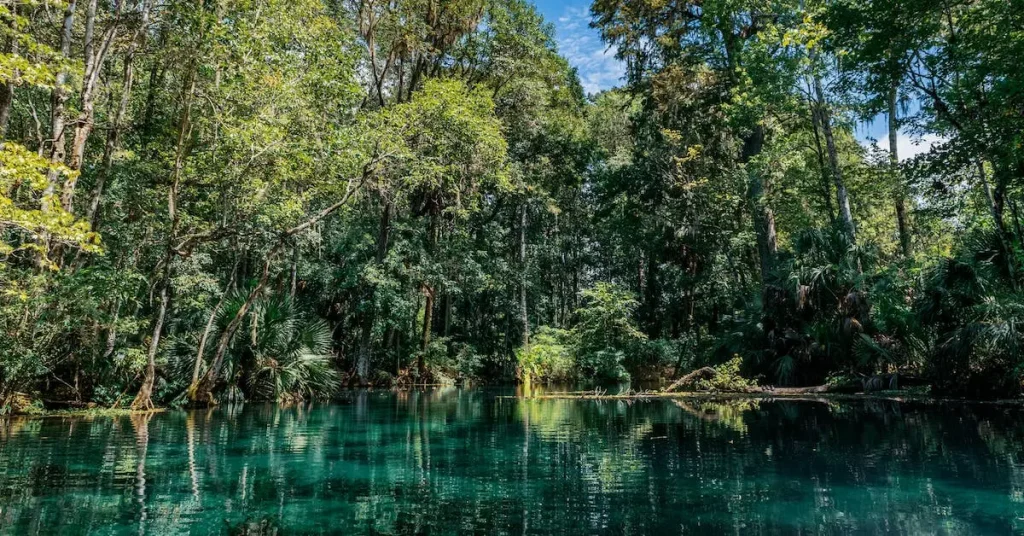
Approximately 30-45 minutes from Daytona Beach, Blue Spring State Park in Orange City offers one of the most remarkable freshwater experiences within easy reach of Florida’s Atlantic Coast. The spring’s water maintains a remarkably consistent temperature of approximately 72°F throughout the year. Emerging from Florida’s underground aquifer system, it flows through a clear spring run surrounded by lush vegetation, creating a beautiful natural swimming environment.
During the permitted swimming season, the clarity of the water makes it possible to observe fish and other aquatic life beneath the surface. The spring is particularly attractive to families looking for an alternative to the Atlantic beaches. But Blue Spring has another extraordinary attraction, and it is one that transforms the park during the winter months.
A winter refuge for Florida’s manatees
When temperatures in the St. Johns River fall, West Indian manatees gather in the spring run to take advantage of its consistently warm water. The numbers can be remarkable. In 1970, researchers counted just 14 manatees using the spring. Following decades of conservation efforts, the winter population had grown to more than 200 by 2005. A record 729 manatees were counted in 2023.
Visitors can observe these enormous aquatic mammals from the park’s elevated boardwalk, providing a wonderful opportunity for children to see Florida wildlife in its natural environment. There is an important distinction between the seasons, however. Swimming and other water activities are prohibited during manatee season, normally November 15 through March 31, with adjustments possible depending on conditions and the presence of manatees.
Other experiences include exploring the historic Thursby House, walking the nature trails and enjoying the park’s picnic facilities.
For families, the combination of freshwater swimming in warmer months and spectacular wildlife viewing during winter makes Blue Spring an attraction worth considering at different times of the year. For visitors with dogs, pets are permitted in certain designated park areas, subject to state park regulations, but not in the swimming area or spring run.
2. Sebastian Inlet State Park: A Surprisingly Sheltered Swimming Cove
Florida’s Atlantic beaches are wonderful places to swim, but ocean conditions are not always ideal for families with younger children. At Sebastian Inlet State Park in Melbourne Beach, there is an interesting alternative. On the north side of the inlet, a protected tidal cove provides a very different swimming experience from the exposed Atlantic shoreline.
The cove has a hard bottom and a gently sloping entrance, helping create a more sheltered environment where families can enjoy the water without the usual Atlantic surf. It is particularly appealing when the ocean is rough, although water conditions and depths still need to be assessed carefully. The cove is not a swimming pool, and depths can vary considerably.
The park itself has more than three miles of Atlantic beaches, offering opportunities for beach walks, shell collecting, surfing and wildlife observation. Kayaking and canoeing provide another way to explore the surrounding waters, particularly along the mangrove-lined shores of the Indian River Lagoon.
The extraordinary story behind the Treasure Coast
There is another reason Sebastian Inlet deserves attention, particularly for families interested in Florida history. In 1715, a Spanish treasure fleet carrying enormous quantities of gold, silver and other valuable cargo was caught in a hurricane off Florida’s Atlantic coast. Numerous ships were wrecked, leaving survivors and salvage crews struggling to recover whatever they could from the sea. The disaster became an important part of the region’s history and helped give Florida’s Treasure Coast its name.
Today, visitors can explore this remarkable episode at the McLarty Treasure Museum, located within the state park. Its exhibits explain the shipwrecks, subsequent salvage operations and the lives of those who established a camp near the coast. It is an unusual combination: a family swimming destination and an opportunity to discover a dramatic episode in Florida’s maritime history.
The sheltered cove, beaches, wildlife and treasure-ship history provide several different experiences during one visit. The museum adds an educational dimension for children interested in pirates, shipwrecks and buried treasure. If you’re traveling with your dog, they are allowed to be in designated areas and campgrounds but are prohibited on the beaches and in swimming areas.
3. Kelly Park at Rock Springs: A Natural Lazy River Adventure
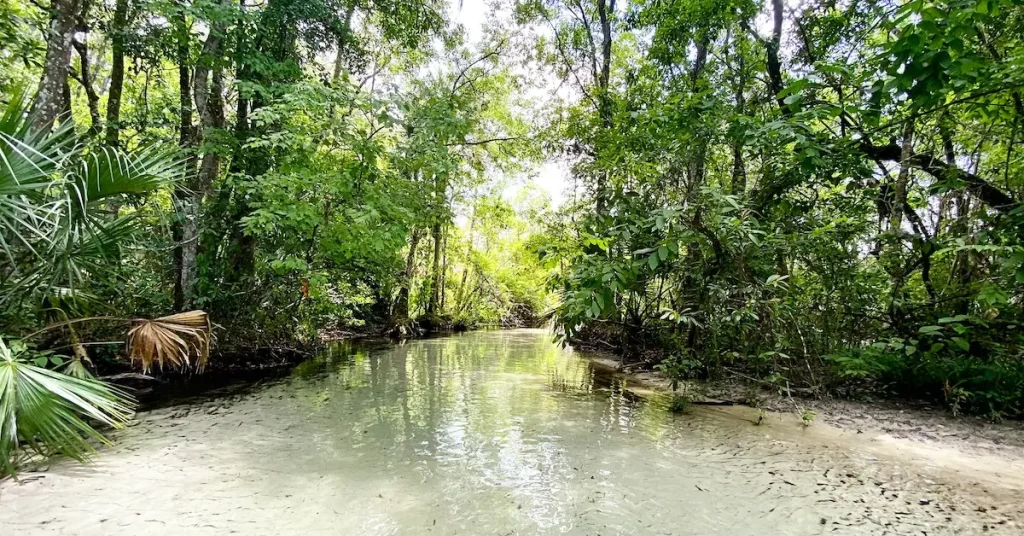
If you are prepared to travel farther inland, Kelly Park at Rock Springs offers one of the most enjoyable freshwater adventures in Central Florida. Located near Apopka, northwest of Orlando, the park is famous for its exceptionally clear spring water and naturally flowing stream. Unlike a conventional swimming pool, Rock Springs is a natural waterway, surrounded by vegetation and shaded areas that create an attractive setting for a day outdoors.
For visitors staying around or in Daytona Beach, the journey is approximately 1.5-2 hours, depending on traffic. It is better regarded as a dedicated day trip than a quick coastal excursion.
Floating through a natural Florida waterway
One of the park’s most popular activities is tubing. Visitors can float downstream along the spring run, allowing the gentle current to carry them through the natural landscape. It is often described as a natural lazy river, although the experience is very different from a purpose-built water attraction. The waterway follows its own natural course, with vegetation and changing depths adding to the sense of adventure.
For families, tubing is the main attraction, although children should be comfortable in the water and use appropriate flotation equipment and adult supervision. The park also has designated swimming areas, picnic facilities, nature trails and playground amenities, making it possible to spend much of the day exploring the surroundings.
Kelly Park is particularly popular during summer weekends and school holidays. Visitor capacity is limited, so checking the latest admission arrangements and arriving early is sensible. It is also worth remembering that tubing equipment and swimming regulations are subject to park rules.
For families, tubing provides a particularly memorable experience for older children and confident swimmers, while playgrounds and picnic areas offer additional activities for younger visitors. Visitors with dogs should not assume that the park’s outdoor setting means your pets can accompany you into the water. Check the current Orange County park rules, particularly the restrictions affecting swimming and tubing areas, before visiting.
Planning Your Florida Blue-Water Adventure
A little preparation can make a considerable difference when visiting Florida’s natural swimming destinations.
- Check swimming conditions: Ocean currents, tides, weather and water quality can change. Pay attention to local warning flags and official advisories.
- Understand seasonal restrictions: Blue Spring closes to water activities during manatee season. Other parks may have their own restrictions.
- Arrive early: Popular springs and state parks can reach capacity, particularly during weekends and school holidays.
- Consider swimming ability: Not all natural swimming areas have lifeguards. Choose activities appropriate for children’s abilities and supervise them closely.
- Protect yourself from the sun: Bring drinking water, hats and suitable sun protection.
- Respect wildlife: Never approach, feed or disturb manatees, dolphins, turtles or other wildlife.
- Check pet regulations: Dogs are not automatically permitted in swimming areas, even when they are welcome elsewhere in a park.
- Check reservations: Some destinations now require advance day-use reservations or have restrictions that can affect your visit.
Florida’s Blue-Water Swimming Spots Are Not All Along the Beach
One of the pleasures of exploring Florida’s Atlantic Coast is discovering how quickly the landscape can change. A morning spent watching manatees in a natural spring, an afternoon swimming in a sheltered coastal cove or a day floating down a freshwater stream can offer experiences that are completely different from the familiar Atlantic beach holiday. And that is perhaps the most interesting discovery of all.
Some of Florida’s most beautiful swimming destinations are not necessarily where you would expect to find them. Sometimes, the most memorable water adventure begins by turning away from the ocean and following the freshwater inland.
- 1. Blue Spring State Park: Crystal-Clear Water and Winter Manatee Encounters
- 2. Sebastian Inlet State Park: A Surprisingly Sheltered Swimming Cove
- 3. Kelly Park at Rock Springs: A Natural Lazy River Adventure
- Planning Your Florida Blue-Water Adventure
- Florida's Blue-Water Swimming Spots Are Not All Along the Beach