
What do a beach playground, a wild barrier island, a golf course with one of the most famous holes in the world and a Spanish fortress made from seashells have in common? They are all part of Florida’s First Coast, where a family vacation can include some rather unexpected discoveries.
Stretching from Jacksonville and Amelia Island to historic St. Augustine, Northeast Florida offers a remarkable variety of experiences. Families can explore undeveloped coastline, encounter wildlife, discover centuries of maritime history and even follow the story of how an ordinary-looking stretch of Florida became an international destination for golf.
Here are three ways to discover a different side of the First Coast, with a few surprises along the way.
1. Enjoy the Beaches and Wild Coastline of Florida’s First Coast

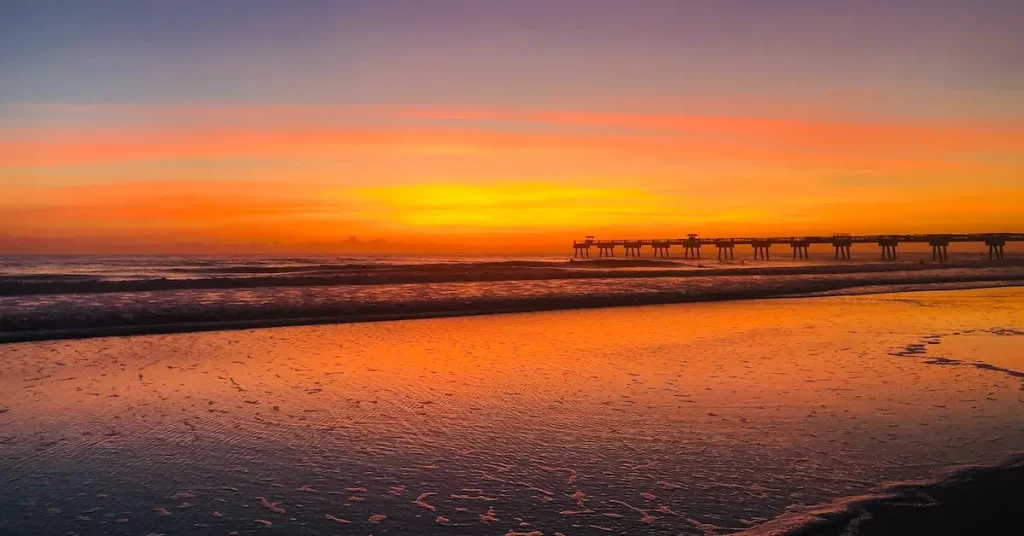
A traditional beach holiday is always popular with families, and the First Coast has plenty of Atlantic shoreline to choose from. Jacksonville Beach offers wide sandy beaches, swimming, fishing and easy access to restaurants. The Jacksonville Beach Pier is a familiar landmark, providing ocean views and opportunities for fishing.
Nearby Neptune Beach has a quieter coastal atmosphere, while Ponte Vedra Beach offers a more peaceful setting, with beautiful shoreline and a long association with golf.
But for families wanting to experience something rather different, Little Talbot Island State Park is worth a visit. One of the few remaining undeveloped barrier islands in Northeast Florida, Little Talbot Island has more than five miles of natural beaches, coastal dunes and maritime forest. Instead of beachfront developments and busy promenades, visitors find a landscape shaped by wind, waves and the Atlantic Ocean.
The island’s natural character is part of its appeal. Fallen trees and exposed roots create unusual shapes along the shoreline, while the surrounding maritime forest and tidal habitats provide opportunities to spot coastal wildlife. Families can explore the walking and cycling trails, enjoy beachcombing or take advantage of the park’s Junior Ranger activities. Children can complete self-guided nature activities and earn badges, turning a walk through the park into something more engaging than an ordinary afternoon outdoors.
There is also a useful consideration for families traveling with dogs. Leashed pets are welcome on designated trails, paved areas, picnic areas and in the campground, although they are not permitted on the beaches or boardwalks.
Little Talbot Island offers a reminder that some of Florida’s most interesting coastal experiences are found away from the developed beach communities.
2. Discover the Natural Beauty and History of Amelia Island
Amelia Island offers another perspective on Northeast Florida, combining coastal wilderness with a fascinating maritime past. At the island’s southern tip, Amelia Island State Park protects more than 200 acres of natural coastal landscape, including beaches, salt marshes and maritime forest. Visitors can enjoy fishing, beachcombing and wildlife watching, with the surrounding waterways providing opportunities for kayaking and paddleboarding.
One of the island’s more unusual experiences involves horses. Amelia Island State Park is among the relatively few places in Florida where visitors can bring their own horses onto the beach. There is something rather special about seeing horses along an Atlantic shoreline, particularly when the setting is so different from the developed beach communities further south. Horse access is subject to park requirements, capacity limits and other regulations, so visitors planning an equestrian trip should check the arrangements beforehand.
After exploring the natural coastline, head to historic Fernandina Beach. Its downtown streets contain historic buildings, independent shops and restaurants, but the town’s past is what makes it particularly interesting. Fernandina was once an important maritime port. Its position near the entrance to the St. Marys River and the Atlantic made it strategically valuable, attracting competing European powers and later American commercial interests.
The result is a historic district that reflects several different periods of Florida’s history. Rather than simply being another attractive seaside town, Fernandina provides an opportunity to discover how trade, shipping and international rivalries helped shape the First Coast.
For families, the combination of beaches, wildlife and historic streets makes Amelia Island an interesting place to spend more than just a day.
3. Explore Wildlife and Discover the Surprising History of St. Augustine
Jacksonville and St. Augustine offer two very different experiences, but both have attractions that can make a family holiday more memorable. In Jacksonville, the Jacksonville Zoo and Botanical Gardens provides an opportunity to encounter wildlife from around the world. One of its more unusual features is the elevated Giraffe Overlook, where visitors can get an eye-level view of the animals.
Children also have plenty to explore in the zoo’s Play Park. Its attractions include climbing areas, mazes, a treehouse, interactive play features and a Splash Ground. There is even an opportunity to see penguins swimming overhead through a viewing window.
Further south, historic St. Augustine offers something rather different: the chance to explore a Spanish fortress constructed using a material made largely from seashells. The impressive Castillo de San Marcos began construction in 1672. Built by the Spanish, the fortress was made from coquina, a type of limestone formed from compressed shells and other marine material.
At first glance, coquina might seem an unusual choice for a military fortification. Yet its properties gave it an unexpected advantage. Unlike harder stone, which could shatter when struck by cannonballs, the relatively soft, porous material could absorb some of the impact. Instead of breaking apart, cannonballs could become embedded in the walls. The choice of building material was not simply an architectural curiosity. It helped the fortress survive bombardments and remain standing through centuries of Florida history.
Even more interesting is where the stone came from. The Spanish quarried the coquina on nearby Anastasia Island, just across the water from St. Augustine. Today, visitors can explore the historic Spanish Coquina Quarries within Anastasia State Park and see where much of the material used to construct the fortress originated.
It creates an unusual opportunity to connect two historic places. Families can first explore the imposing stone walls of Castillo de San Marcos and then visit the island where the building material was extracted. Few historical outings offer such a direct connection between a building and the landscape that supplied its stone.
St. Augustine has other attractions worth exploring, including the Alligator Farm Zoological Park, historic St. George Street and the city’s Spanish colonial architecture. For children, the coquina story provides a particularly interesting introduction to the relationship between Florida’s natural environment and its history.

Choosing a Family Base: Beaches, Golf and More
Where you stay can shape the kind of family holiday you enjoy on Florida’s First Coast. Jacksonville Beach, Amelia Island, Ponte Vedra Beach and St. Augustine each offer a different atmosphere, so it is worth considering which experiences matter most to your family.
For families who enjoy golf, Ponte Vedra Beach deserves particular attention. Golf has been part of the area’s identity since 1928, when the development of the original golf course helped establish Ponte Vedra as a seaside resort destination. The area subsequently became home to TPC Sawgrass, one of the most recognizable names in American golf.
Its Stadium Course, designed by American golf course architect Pete Dye, is famous for the 17th hole, a short par-three surrounded almost entirely by water. The island green has become one of the most well-known features in professional golf, and its creation has an interesting story of its own. During construction, the excavation of the surrounding lake left the designers with a green sitting on an island of sand. Pete Dye’s wife, Alice, suggested keeping the green there and surrounding it with water. An unexpected construction problem became one of golf’s most famous holes.
For families with an interest in the sport, this adds another dimension to a visit to Ponte Vedra. Golf enthusiasts can experience the area where the game has become such an important part of Northeast Florida’s identity, while younger visitors can discover more about the sport through appropriate practice facilities and junior golf opportunities available at selected venues.
A golf-oriented holiday does not necessarily mean spending every day on a championship course. Families can combine golf with beach activities, swimming, sightseeing and visits to nearby Jacksonville and St. Augustine. It is this variety that makes Ponte Vedra an interesting base for a longer stay.
Of course, golf is only one consideration. Families wanting to spend more time exploring the historic attractions of St. Augustine may prefer to stay closer to the city, while Amelia Island offers a convenient starting point for beach days, kayaking and nature adventures.
The best location ultimately depends on whether your family prefers a beach-focused break, an active outdoor holiday, a golfing escape or a mixture of sightseeing and relaxation.
A Family Vacation Along a Coastline with More to Discover
Florida’s First Coast has plenty of familiar attractions, but some of its most interesting experiences come from looking beyond the obvious.
On Little Talbot Island, families can discover a surviving stretch of undeveloped coastline. Amelia Island offers the unusual sight of horses on an Atlantic beach and a historic town shaped by maritime trade. In Ponte Vedra, a famous golf hole has its own unexpected story, while St. Augustine reveals how compressed seashells became the building blocks of a Spanish fortress.
Perhaps that is what makes the region particularly appealing for families. A beach holiday can become a wildlife adventure, a history lesson or an opportunity to discover something completely unexpected. And sometimes the most memorable part of a Florida holiday is not simply the place you visit, but the surprising story you bring home with you.