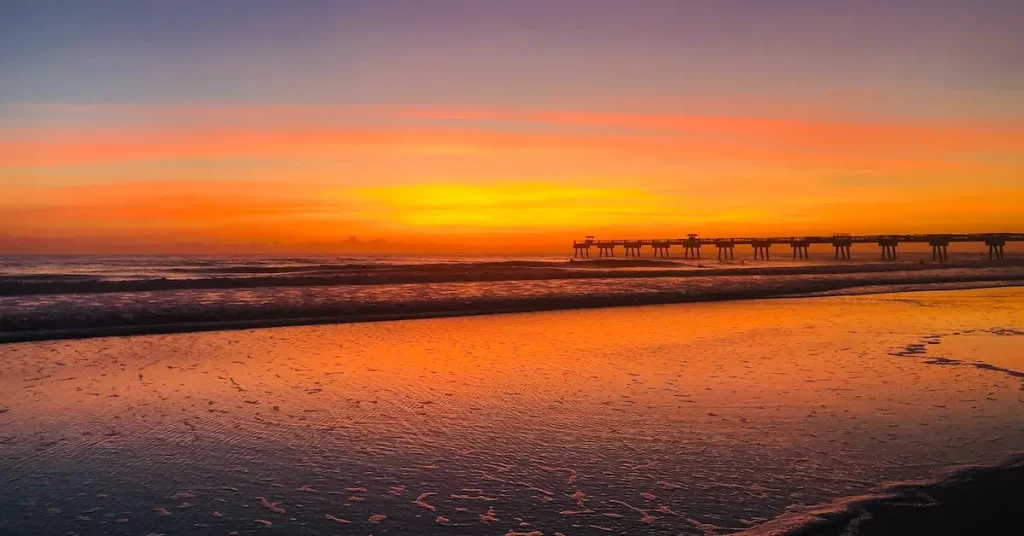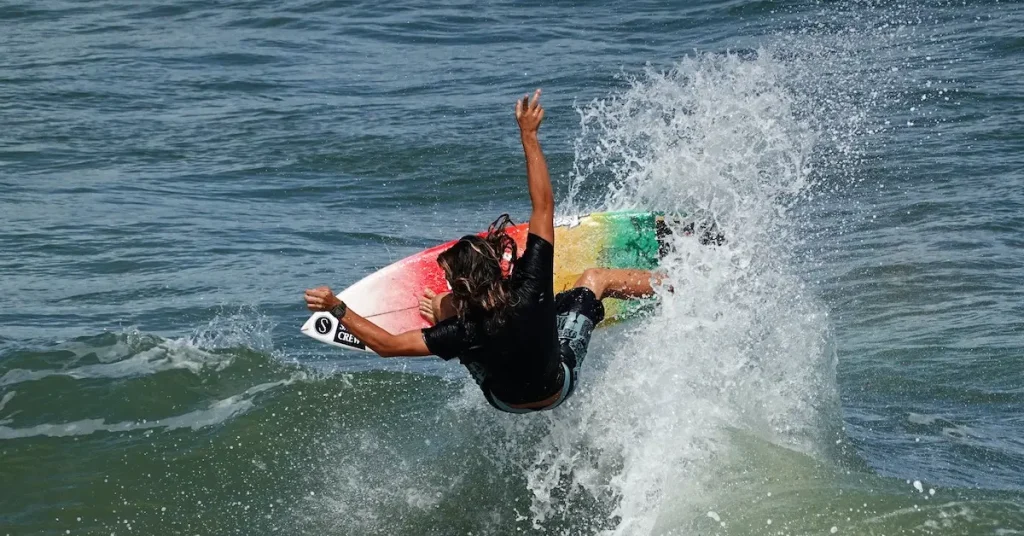

Somewhere along Florida’s Atlantic coastline, a surfer is waiting for the next wave. It might be a local who has been riding these beaches for decades, a teenager learning how to surf, or a visitor discovering that Florida has a surfing culture of its own.
New Smyrna Beach has become one of the best-known surfing destinations on Florida’s East Coast. Its waves have attracted generations of enthusiasts, competitive surfers and people who have helped establish a distinctive local surfing tradition.
But there is much more to this stretch of coastline than surfboards and breaking waves. From the unusual geography of Ponce Inlet to a museum dedicated to East Coast surfing, Florida’s Fun Coast offers some fascinating discoveries for anyone interested in the state’s coastal history and culture.
New Smyrna Beach: The Heart of Florida’s Surfing Culture

New Smyrna Beach is arguably the natural starting point for exploring the Fun Coast‘s surfing heritage. Although Florida cannot compete with Hawaii or California for enormous ocean swells, its Atlantic coastline has developed a distinctive surfing identity. Seasonal weather systems, incoming swells and constantly changing sandbars create opportunities for surfers throughout the year. New Smyrna Beach has become particularly important to this culture.
The area’s organized surfing history includes the formation of the Smyrna Surf Club in 1963 and the establishment of the Smyrna Surfari Club in 1979. The latter helped develop a tradition of surfing competitions, community involvement and support for younger generations. Over the years, local surfers and competitive events helped establish New Smyrna Beach as an important destination within Florida’s surfing community.
Today, the town’s surfing identity remains visible along the coastline, where experienced surfers share the waves with beginners discovering the sport for the first time.
A Museum Dedicated to East Coast Surfing
One of the more unusual discoveries in New Smyrna Beach is its Museum of East Coast Surfing, an exhibit within the New Smyrna Museum of History. Located at 120 Sams Avenue in the historic Canal Street district, the collection features historic photographs, surfboards, memorabilia and other objects celebrating the area’s surfing heritage. It offers an opportunity to discover the people and equipment behind Florida’s surfing traditions rather than simply watching the waves from the beach.
The museum is particularly interesting for families with children who enjoy sport, history and learning how surfboards and surfing culture have evolved. The wider New Smyrna Museum of History also explores the area’s earlier past, including the remarkable eighteenth-century Turnbull settlement.
The museum is generally open Tuesday through Saturday, 10 a.m. to 4 p.m. Published admission for the wider museum is $8 for adults, $5 for ages 11–17 and free for children aged 10 and under. Check current arrangements before visiting.
The Geography Behind the Waves
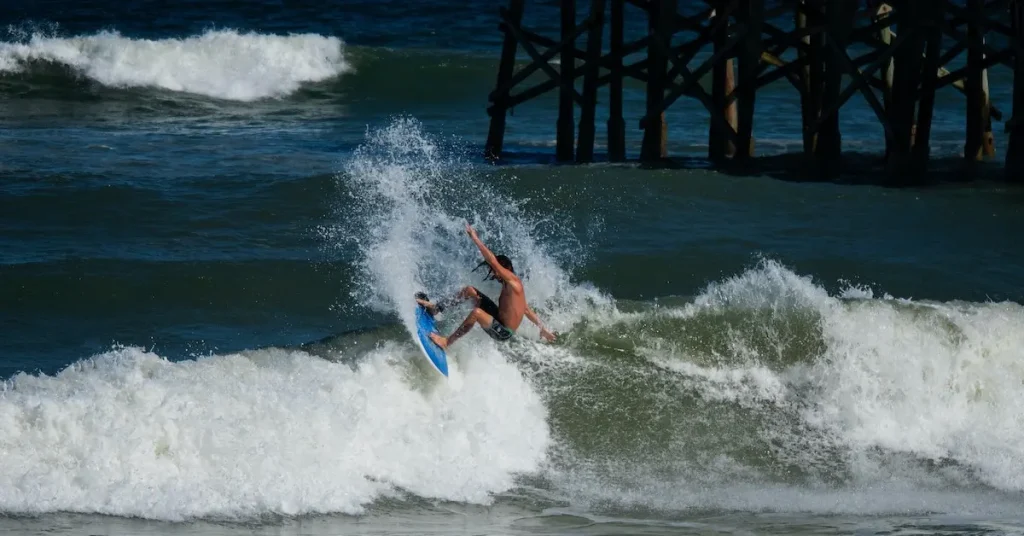
One of the most interesting features of this coastline is Ponce de Leon Inlet, immediately south of Daytona Beach and close to New Smyrna Beach. The inlet and its surrounding underwater sand formations influence how incoming Atlantic waves break. Changing sandbars can produce different surfing conditions, making this stretch of coastline particularly interesting to experienced surfers.
The area around the inlet became an important location for competitive surfing, helping attract enthusiasts from beyond the local community. Conditions are never guaranteed, however. Wind direction, tides, incoming swells and weather systems all influence the quality of the waves.
For visitors, simply spending time around the inlet and watching the changing surf provides an opportunity to appreciate the relationship between Florida’s coastal geography and its surfing culture.
Ponce Inlet: A Lighthouse and a Coastal Wildlife Haven
One of the Fun Coast‘s most recognizable landmark is the Ponce de Leon Inlet Lighthouse, completed in 1887. Standing 175 feet tall, it is one of Florida’s most impressive historic lighthouses. Visitors can climb its 203 steps for panoramic views of the Atlantic Ocean, the inlet and the surrounding coastline. The adjoining museum provides insight into the history of lighthouse keeping and maritime navigation.
Nearby, Lighthouse Point Park offers a very different experience. This 52-acre coastal preserve occupies a beautiful position between the Atlantic Ocean, Ponce Inlet and the Halifax River. Natural dunes, boardwalks, nature trails and an observation tower provide opportunities to explore the coastal environment. Dolphins and manatees can sometimes be spotted in the surrounding waters.
The park is also particularly useful for families and dog owners. Leashed dogs are welcome, although visitors should follow designated access arrangements. The park is generally open from sunrise to sunset, with a vehicle admission charge.
Exploring the Other Beaches of the Fun Coast
Although New Smyrna Beach is the centerpiece of the surfing story, the wider coastline has plenty of individual character. Further north, Daytona Beach combines a wide Atlantic shoreline with a famous motorsports heritage and a lively entertainment scene.
Ormond Beach offers a quieter alternative, with opportunities for beach walks, fishing and exploring nearby parks. Designated sections of its shoreline also welcome leashed dogs.
Flagler Beach has perhaps one of the most distinctive small-town atmospheres along this stretch of coast. Its colorful buildings, ocean views and local surfing community give it a character quite different from the larger beach destinations.
More Than Just a Place to Catch Waves and Learn How to Surf
Florida’s Fun Coast has developed an identity around its relationship with the Atlantic Ocean. For some visitors, that means surfing the waves of New Smyrna Beach. For others, it means climbing a historic lighthouse, exploring coastal wildlife habitats or discovering the history preserved in a local museum.
But behind New Smyrna Beach‘s surfing reputation lies a story of generations of local enthusiasts, surfing competitions and a community that helped establish Florida’s own place in East Coast surfing culture. Perhaps the best way to appreciate that story is to start with the old surfboards and photographs in downtown New Smyrna Beach, before heading out to see the waves for yourself.
It is a reminder that some of Florida’s most interesting discoveries are not necessarily hidden away. Sometimes, they are waiting just beyond the shoreline.