


Florida’s Atlantic coastline is famous for its beautiful beaches, but some of the state’s most memorable water adventures take place miles away from the ocean. Hidden behind the coastal communities are winding rivers, mysterious cypress swamps, freshwater lakes and sheltered lagoons offering freshwater activities and an entirely different perspective on the Sunshine State.
You can paddle beneath ancient-looking trees, fish in one of Florida’s great river systems or venture onto a lagoon after dark to witness water that appears to glow with its own light.
Some of these experiences are surprisingly close to popular Atlantic Coast destinations. Others take you into landscapes that feel a world away from the busy beaches. Whether you enjoy fishing, kayaking or simply exploring somewhere different, here are three wonderful ways to discover Florida’s inland waterways.
1. Discover Florida’s Freshwater Fishing

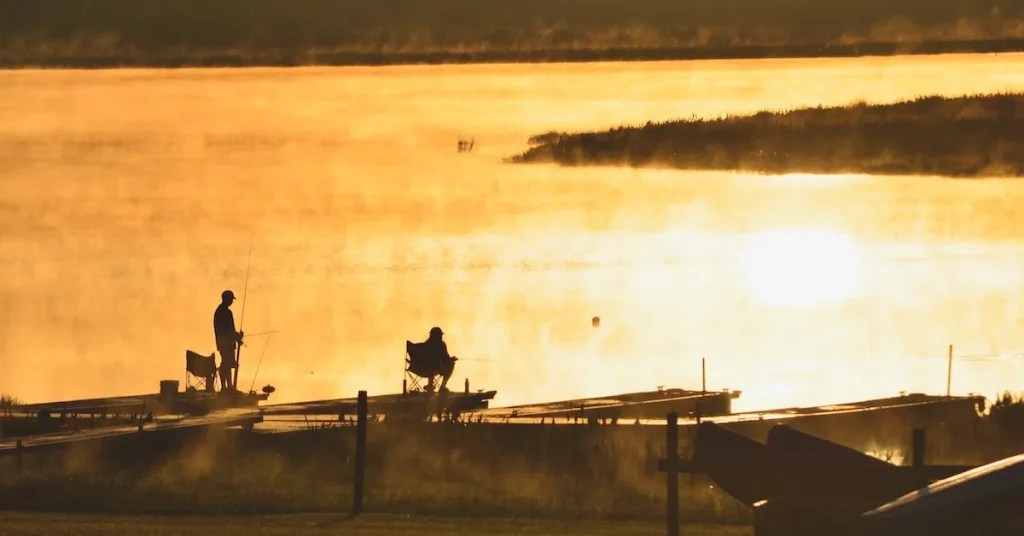
Florida has an extraordinary variety of freshwater fishing opportunities, with lakes, rivers and wetlands supporting largemouth bass, bluegill, crappie and catfish. One of the best places to begin exploring is the St. Johns River, which flows north through much of Central and Northeast Florida before reaching the Atlantic near Jacksonville.
Unlike most major American rivers, which flow south towards the Gulf of Mexico or the Atlantic, the St. Johns travels north. Its extensive system of lakes, tributaries, marshes and slow-moving waterways creates a remarkable variety of fishing environments. The river also offers some particularly attractive places to explore.
Lake George, located south of Palatka and approximately 35-40 miles west of Ormond Beach, is one of the largest lakes in Florida and forms an important part of the St. Johns River system. Its expansive waters provide opportunities for freshwater fishing, boating and wildlife observation.
If you’re visiting with your dog, Lake George also offers opportunities for a day outdoors with your four-legged companion. Certain recreation areas, including Lake George Forest and Wildlife Management Area, allow leashed pets, making it possible to enjoy the surrounding natural scenery together. Check individual access rules before visiting and remember to keep dogs away from wildlife.
Further south, Lake Monroe, near Sanford and approximately 30 miles west of New Smyrna Beach, offers another accessible location for fishing and exploring the river system. Its position within the St. Johns makes it an interesting destination for anglers wanting to experience one of Florida’s most important waterways.
For something a little different, consider Lake Woodruff National Wildlife Refuge, near DeLeon Springs and approximately 25 miles west of Daytona Beach. This protected landscape of marshes, lakes and wetlands provides a wonderful opportunity to experience Florida’s freshwater environment and observe its abundant birdlife and other wildlife.
Fishing is not the only attraction. These waterways offer opportunities to explore quieter sections of Florida that are often overlooked by visitors concentrating on the beaches. Whether you prefer fishing from a boat, casting from the shoreline or combining fishing with a kayak excursion, the St. Johns River system offers plenty of possibilities.
Before setting out, check the Florida Fish and Wildlife Conservation Commission’s current freshwater fishing regulations, including license requirements and species-specific restrictions.
2. Explore Florida’s Beautiful Rivers by Kayak or Paddleboard
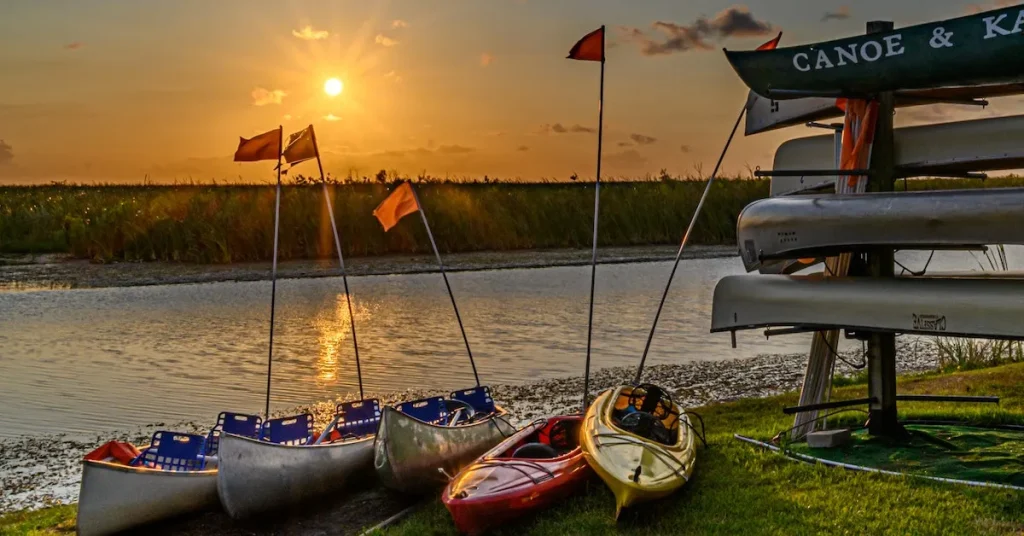
Some of Florida’s most beautiful natural landscapes are best explored at a leisurely pace, and kayaking provides an opportunity to discover places that larger boats cannot easily reach. Along Florida’s Atlantic Coast, several rivers offer particularly memorable paddling experiences.
The Loxahatchee River: A Journey Through Ancient Cypress Forests
Near Jupiter, the Loxahatchee River provides one of South Florida’s most beautiful natural paddling experiences. Its upper reaches wind through a remarkable landscape of towering bald cypress trees, overhanging vegetation and dark, tannin-stained water. In places, the trees form a natural canopy above the river, creating an atmosphere that feels far removed from the surrounding coastal communities.
There is also an important distinction that makes this river particularly special. In 1985, the Loxahatchee became Florida’s first federally designated National Wild and Scenic River. The protected Northwest Fork can be explored from Riverbend Park in kayaks and canoes.
An especially interesting feature is the connection with Jonathan Dickinson State Park. The river passes through the park, where paddlers can discover more of its natural scenery and explore the historic Trapper Nelson Interpretive Site.
Nelson, sometimes remembered as the Wild Man of the Loxahatchee, lived in this remote part of Florida and became a colorful character in the region’s history. His former homestead, accessible by water, adds an intriguing historical dimension to what is already an exceptional paddling destination.
The Tomoka River: Nature and Ancient Florida History
For visitors exploring the Daytona Beach and Ormond Beach area, the Tomoka River offers another wonderful opportunity to experience Florida’s quieter side. Flowing through Tomoka State Park, the river is surrounded by marshes, coastal vegetation and natural woodland. Its winding waterways provide opportunities for kayaking and canoeing, with wildlife frequently visible along the shoreline.
But there is another reason to visit. The park contains the site of Nocoroco, an ancient Timucuan village that once occupied this part of Florida. The Timucua were among the Indigenous peoples who inhabited northeastern and north-central Florida before European colonization. Their communities were closely connected to the region’s rivers, coastal environments and natural resources.
Today, visitors to Tomoka State Park can explore the landscape where this historic community once existed. It is an interesting reminder that Florida’s waterways were important transportation routes, sources of food and centers of human activity long before modern roads and coastal resorts appeared.
Kayaking here offers something more than a pleasant outdoor excursion: an opportunity to explore a landscape with a much longer human history.
A Note About the Indian River Lagoon
The Indian River Lagoon is another excellent paddling destination, particularly around Melbourne, Merritt Island and the Space Coast. However, it is worth understanding that the lagoon is not technically a freshwater river. It is a large estuary where freshwater from the mainland mixes with saltwater from the Atlantic Ocean.
Its sheltered waterways, mangroves and remarkable wildlife make it an excellent location for kayaking and stand-up paddle boarding. Dolphins, manatees, fish and numerous bird species inhabit the lagoon, although wildlife sightings are never guaranteed.
3. Experience the Extraordinary Glow of Bioluminescent Kayaking
If there is one experience that deserves a special place on any Florida water-adventure bucket list, it is bioluminescent kayaking on the Space Coast. During the warmer months, certain waterways near Titusville, Merritt Island and Cocoa Beach can become illuminated by an extraordinary natural phenomenon.
The water appears to glow blue-green whenever it is disturbed. A paddle entering the water creates a shimmering trail of light. Fish moving beneath the surface can produce flashes of illumination, while even the smallest movements can create a sparkling effect.
It almost seems as though someone has scattered thousands of tiny stars beneath the surface.
But what causes this remarkable display? The phenomenon is produced by microscopic organisms called dinoflagellates. These single-celled marine organisms produce light through a chemical reaction when disturbed. The light is a biological response rather than a reflection of moonlight or artificial illumination.
Florida’s Space Coast is one of the best-known places in the United States to experience this phenomenon. Popular locations include Mosquito Lagoon, the Banana River and parts of the Indian River Lagoon.
The experience is particularly memorable because it takes place after dark, when the surrounding landscape becomes almost completely hidden. With little artificial light, the glowing water becomes the centre of attention.
When Is the Best Time to See Bioluminescence?
The Space Coast‘s bioluminescence season generally runs from June through October, with the strongest dinoflagellate displays typically occurring between July and September. However, bioluminescence is a natural phenomenon, and its intensity changes according to environmental conditions and the concentration of organisms in the water.
For the best experience:
- Book a guided nighttime kayaking excursion with an established local operato
- Consider dates around the new moon, when darker skies can make the glow easier to appreciate.
- Check weather conditions and tour availability before traveling.
- Wear comfortable clothing and bring insect repellent.
- Reserve ahead during the summer season.
Guided excursions are particularly worthwhile for first-time visitors. Experienced guides know the waterways, understand local conditions and can help visitors make the most of this unusual natural experience.
One important detail: not all bioluminescence is caused by dinoflagellates. The Space Coast also experiences displays involving bioluminescent comb jellies, which create a different type of glowing spectacle. It is an extraordinary example of how much more there is to Florida’s natural environment than meets the eye.
A Few Tips for Exploring Florida’s Inland Waterways
Before heading out, remember that Florida’s rivers and lagoons have their own conditions and potential hazards. Choose a waterway appropriate for your experience. Some rivers are sheltered and relatively easy to explore, while others have stronger currents, tidal influences or exposed stretches that become challenging in windy weather.
Always wear a properly fitted personal flotation device and check local boating requirements. Florida’s afternoon thunderstorms can develop quickly, particularly during the warmer months, so check the forecast before setting out.
If you encounter manatees, dolphins or other wildlife, observe them from a respectful distance. Never attempt to touch, feed or pursue them. Finally, remember that the waterways themselves are part of Florida’s natural heritage. Take rubbish with you, avoid disturbing sensitive vegetation and follow local conservation guidelines.
Discover Freshwater Activities, the Other Side of Florida
Florida’s Atlantic Coast offers far more than beautiful beaches and oceanfront attractions. Its inland waterways reveal a completely different side of the state: ancient cypress forests, historic Indigenous settlements, expansive freshwater lakes and extraordinary natural phenomena that few visitors ever experience.
You could spend a morning fishing along the St. Johns River, paddle through the shaded waterways of the Loxahatchee or discover the history of the Timucua along the Tomoka River.
And if you happen to visit the Space Coast during the summer, you might even find yourself paddling through water that appears to glow beneath the night sky.
These are the kinds of experiences that remind us how much of Florida remains waiting to be discovered. Sometimes, the most extraordinary Florida adventures begin when you turn away from the ocean and follow the water inland.


