

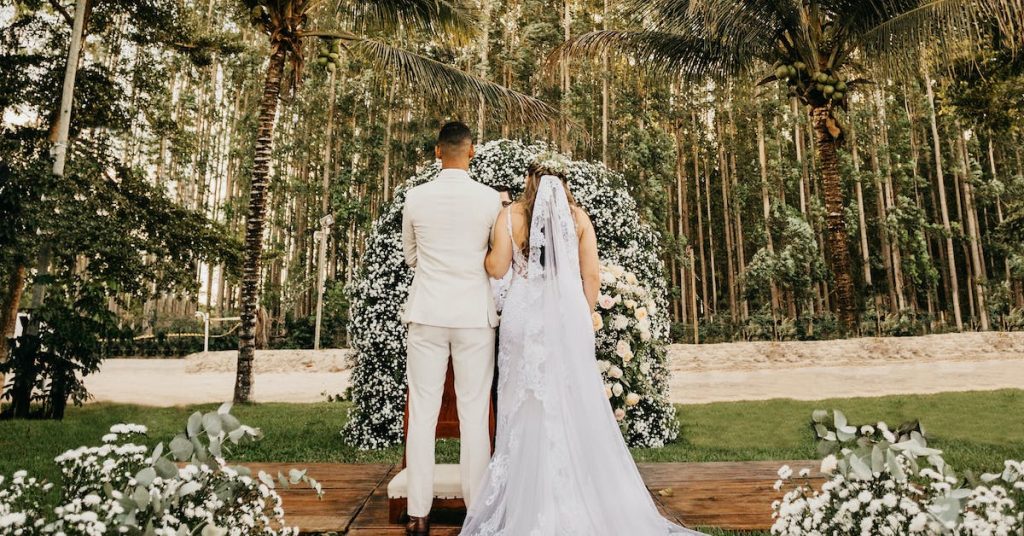

A wedding venue doesn’t have to be a hotel ballroom, a country club or a conventional beach resort. Some of Florida’s most memorable settings for exchanging vows are places with fascinating histories, extraordinary natural surroundings or architectural details that make them quite unlike anywhere else.
Along Florida’s Atlantic Coast, couples can choose from sweeping ocean beaches, tropical gardens filled with monumental sculptures, historic courtyards and grand buildings dating back to the state’s Gilded Age. Some locations are naturally suited to intimate outdoor ceremonies, while others offer the atmosphere of a historic estate or the elegance of a grand oceanfront celebration.
If you’re looking for inspiration beyond the usual wedding venue directory, here are three distinctive ways to discover the possibilities along Florida’s East Coast.
1. The Romance of the Atlantic: A Beach Wedding on Florida’s East Coast

There is a reason beach weddings remain so popular. The Atlantic Ocean provides a natural backdrop, the coastal light is particularly beautiful for photography, and the landscape offers an atmosphere that is difficult to reproduce indoors. But not all Florida beaches look or feel the same, and choosing the right stretch of coastline can make a considerable difference to the character of a wedding.
In Northeast Florida, Amelia Island offers an appealing combination of broad sandy beaches, natural dunes, maritime forests and historic surroundings. Unlike some of South Florida’s busier coastal destinations, parts of the island retain a relatively relaxed atmosphere. The nearby historic district of Fernandina Beach also provides an attractive setting for wedding guests interested in exploring the area before or after the celebrations.
For couples who appreciate natural scenery, Fort Clinch State Park is another interesting place to investigate. Its combination of coastal landscapes, maritime vegetation and historic military architecture makes it particularly distinctive.
Further south, Vero Beach offers another appealing stretch of Atlantic coastline. Its quieter beaches and laid-back atmosphere make it worth considering for couples who prefer a less urban setting.
The Space Coast also deserves attention. Around Cocoa Beach and Melbourne, the Atlantic shoreline provides opportunities for ceremonies with a distinctly coastal Florida atmosphere.
One important consideration is that public beaches are not automatically unrestricted wedding venues. Local rules concerning permits, guest numbers, equipment, decorations and amplified sound vary. State parks may have their own arrangements, so always check with the relevant authorities before making plans.
The attraction of a Florida beach wedding is its simplicity: the landscape does much of the work. Whether the backdrop is the dunes of Amelia Island or the open coastline of the Treasure Coast, the natural surroundings can provide an unforgettable setting.
2. A Garden Wedding With an Artistic Difference
For couples who love outdoor celebrations but want something more unusual than a conventional garden, Florida has some remarkable artistic landscapes.
One particularly interesting discovery is Ann Norton Sculpture Gardens. This two-acre tropical sanctuary is not simply a beautifully landscaped garden. It is also the former home, studio and creative environment of sculptor Ann Weaver Norton (1905–1982).
Norton established the gardens in 1977, intending to preserve her home, monumental sculptures and remarkable collection of tropical plants for public enjoyment. Today, visitors can discover nine monumental garden sculptures, including eight constructed from brick and one from granite. These imposing works emerge from the surrounding vegetation, creating a landscape that feels more like an outdoor art installation than a traditional botanical garden.
The property also contains more than 250 species of rare palms and cycads, together with the historic Norton House and the artist’s former studio. The sculptures were designed to be discovered gradually rather than viewed as a conventional collection. As visitors follow the garden paths, large sculptural forms appear unexpectedly among the tropical vegetation.
It is an extraordinary setting and a reminder that some of Florida’s most interesting outdoor spaces combine art, architecture and nature in unexpected ways.
For couples imagining a garden wedding, this type of setting offers a very different atmosphere from a traditional hotel lawn or botanical garden. The surroundings themselves provide distinctive photographic opportunities, while the sculptures and mature tropical vegetation create a memorable sense of place.
The gardens have previously published private-event and wedding information, although couples should confirm directly whether weddings are currently available and what restrictions apply.
West Palm Beach also offers other possibilities for garden-inspired celebrations, particularly around its historic residential neighborhoods, where Mediterranean Revival and other distinctive architectural styles provide attractive backdrops.
The real appeal of a garden wedding is the opportunity to combine nature with personality. Rather than simply choosing somewhere green and picturesque, couples can find a setting with artistic or historical character that makes the occasion feel genuinely individual.
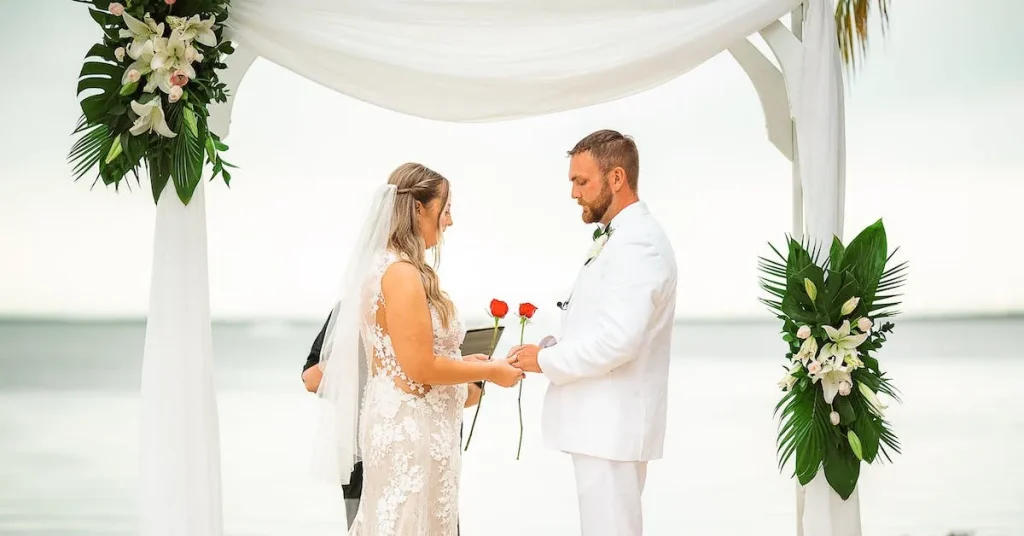
3. Florida’s Historic Grandeur: Celebrate Among Architectural Landmarks
Florida’s Atlantic Coast has an architectural heritage that many visitors associate primarily with its grand historic hotels. During the late nineteenth and early twentieth centuries, industrialists, wealthy winter visitors and fashionable society helped transform places such as St. Augustine and Palm Beach into celebrated destinations. Some of the buildings constructed during this period remain among Florida’s most impressive architectural landmarks.
For couples who appreciate history and unusual surroundings, they offer a particularly interesting source of wedding inspiration. Perhaps the most surprising example is the Lightner Museum in historic St. Augustine. The museum occupies the former Hotel Alcazar, commissioned by industrialist and railroad developer Henry Flagler and opened in 1888.
The hotel was designed as part of Flagler’s ambitious plan to transform St. Augustine into a fashionable winter destination for wealthy visitors. But the Alcazar was more than a place to sleep. Its recreational facilities included Turkish and Russian baths, a gymnasium, bowling alley, archery range and an enormous indoor swimming pool. The pool was one of the hotel’s great attractions and was described as the largest public indoor swimming pool in the world at the time.
When the hotel eventually closed in 1931, its future became uncertain. In 1947, collector Otto Lightner purchased the building and transformed it into a museum, which opened to the public the following year. Today, the former hotel houses an eclectic collection of art, decorative objects, antiques and curiosities. Its historic architecture and extraordinary former pool also make it an unusual event setting.
For couples seeking something different from a conventional ballroom, the possibility of celebrating in a space originally created for Gilded Age recreation is particularly appealing.
Further south, Palm Beach offers another glimpse of Florida’s grand architectural past.
The The Breakers began as the Palm Beach Inn in 1896, established by Henry Flagler as an oceanfront companion to his enormous Royal Poinciana Hotel. After two devastating fires, the present building opened in December 1926. Its Italian Renaissance-inspired design, elaborate interiors and decorative work by Italian artisans reflect the extraordinary ambitions of Palm Beach during the period.
The resort is a reminder that Florida’s historic hotels are themselves part of the destination experience. Their architecture, gardens and interiors tell the story of how the state’s Atlantic coastline developed into one of America’s most celebrated winter playgrounds.
Whether you prefer the historic atmosphere of St. Augustine or the grandeur of Palm Beach, these architectural landmarks demonstrate that a wedding setting can be much more than an attractive building. It can also be a place with a remarkable story.
A Few Things to Consider When Planning a Florida Wedding
Once you’ve found a style of setting that appeals to you, there are several practical details worth considering.
Choose the season carefully.
Winter and spring are popular for outdoor weddings because temperatures are generally more comfortable. Summer brings higher humidity, heat and frequent afternoon thunderstorms. Florida’s Atlantic hurricane season also runs from June through November.
Think about your guests.
A wedding can become a wonderful opportunity for friends and family to enjoy a Florida holiday. Consider accommodation, airport access, restaurants and nearby attractions when choosing a location.
Check accessibility and restrictions.
Historic properties, gardens, public beaches and state parks may have different rules governing ceremonies, decorations, photography, guest numbers and equipment.
Arrange a weather alternative.
Outdoor weddings need a realistic contingency plan. Ask about covered areas, indoor facilities and arrangements in the event of severe weather.
Visit before making a decision.
Photographs are useful, but experiencing a location in person is the best way to appreciate its atmosphere and understand whether it suits your plans.
Discover a Different Side of Florida Through Your Wedding
Florida’s East Coast offers far more than the familiar image of a beach ceremony followed by a reception at a luxury hotel. It is a coastline where natural beauty meets fascinating history, where tropical gardens become outdoor art galleries and where buildings created for the wealthy winter visitors of another era have found new lives as museums and cultural landmarks.
You might find your inspiration on the Atlantic beaches of Amelia Island, among the monumental sculptures of West Palm Beach, or within the extraordinary architectural surroundings of historic St. Augustine. Each offers a different experience, and each reveals something interesting about the places that make Florida such an appealing destination.
The most memorable wedding setting may not necessarily be the grandest or the most expensive. It might simply be somewhere with a story, a distinctive atmosphere and a connection to Florida that makes the occasion uniquely yours.
- 1. The Romance of the Atlantic: A Beach Wedding on Florida's East Coast
- 2. A Garden Wedding With an Artistic Difference
- 3. Florida's Historic Grandeur: Celebrate Among Architectural Landmarks
- A Few Things to Consider When Planning a Florida Wedding
- Discover a Different Side of Florida Through Your Wedding


