

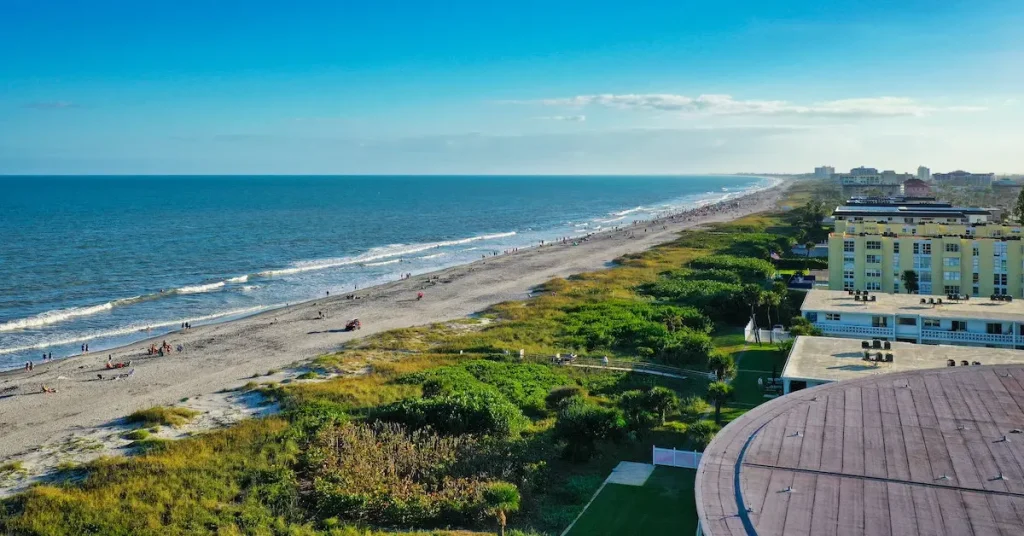

A wildlife refuge born alongside America’s space program, ancient Indigenous monuments and glowing waterways reveal remarkable natural attractions of Florida’s Space Coast.
When NASA began developing Kennedy Space Center in the early 1960s, the world was looking towards the Moon. Few could have imagined that the land surrounding America’s future spaceport would also become one of Florida’s most important wildlife sanctuaries. Yet that is precisely what happened.
Today, alligators inhabit wetlands beneath rocket flight paths, manatees move through sheltered lagoons and thousands of migratory birds gather around the same landscape used for some of the world’s most ambitious space missions.
Beyond Kennedy Space Center, the surrounding coastline holds other surprises, including ancient Indigenous monuments, undeveloped Atlantic beaches and waterways that glow with natural light after dark. Here are seven places that reveal the extraordinary natural and historical character of Florida’s Space Coast.

1. Merritt Island: The Wildlife Refuge Born from the Space Race
Perhaps the most remarkable connection between Florida’s space program and its natural environment can be found at Merritt Island National Wildlife Refuge. When NASA acquired land to develop Kennedy Space Center, it did not need every acre for launch facilities and supporting operations. In 1963, an agreement between NASA and the U.S. Fish and Wildlife Service established a wildlife refuge across much of the surrounding landscape.
The result was an extraordinary arrangement: a protected natural environment existing alongside one of the world’s most advanced space facilities. Covering approximately 140,000 acres, the refuge now supports more than 1,500 species of plants and animals. Its wetlands, salt marshes, pine forests and coastal habitats provide shelter for alligators, manatees, river otters and hundreds of bird species.
One of the best ways to explore is Black Point Wildlife Drive, a seven-mile scenic route through marshland where visitors can observe wildlife from their vehicles. It is particularly appealing to families with younger children, offering an accessible way to spot alligators, birds and other native animals without requiring an extended hike.
The refuge also offers walking trails, observation points and opportunities for fishing and kayaking. Leashed pets are welcome, making Merritt Island one of the more accommodating wildlife destinations for visitors traveling with dogs.
Visiting: Black Point Wildlife Drive requires a refuge pass. Roads and trails generally operate from sunrise to sunset, although launch operations can cause temporary restrictions.
2. Canaveral National Seashore: Ancient Monuments Overlooking the Lagoon
Canaveral National Seashore preserves one of Florida’s most impressive stretches of undeveloped Atlantic coastline. But its beaches and coastal wetlands conceal something considerably older than the modern Space Coast.
Turtle Mound is an enormous archaeological shell mound built by Indigenous communities over generations. Associated with the Timucuan people, the mound consists largely of accumulated oyster shells and other materials from centuries of habitation. Its principal period of accumulation dates from approximately 800 to 1400 CE.
Rising around 35 feet, it is one of the most prominent surviving examples of these ancient coastal structures. A visitor walkway leads to the summit, where views extend across Mosquito Lagoon and the surrounding landscape.
It is a remarkable place to appreciate how long people have lived along this coastline and depended on its abundant natural resources. The national seashore also preserves approximately 58,000 acres of beaches, dunes, lagoons and wetlands.
Canaveral National Seashore is also an appealing destination for families, combining beach exploration, wildlife watching and opportunities to learn about Florida’s Indigenous history. Turtle Mound is particularly interesting for younger visitors, while the surrounding coastline offers plenty of space to explore. Visitors traveling with dogs should note that pets are permitted in certain lagoon-side areas and on designated trails, but are prohibited on the beaches and beach boardwalks.
Visiting: The park has two main beach districts, Apollo Beach and Playalinda Beach. General operating hours are 6 a.m. to 6 p.m., with last entry at 5 p.m.
3. Indian River Lagoon: One of America’s Remarkable Estuaries
Stretching approximately 156 miles along Florida’s Atlantic coast, the Indian River Lagoon is one of the region’s most important natural environments. Its interconnected waterways include the Indian River, Banana River and Mosquito Lagoon. Together, they support an extraordinary variety of marine life.
Florida State Parks identifies approximately 685 fish species and 370 bird species associated with the lagoon system. Manatees, dolphins, sea turtles and numerous migratory birds depend on its seagrass beds, mangroves and adjoining wetlands.
For visitors, kayaking offers one of the best ways to explore the quieter sections of the lagoon. Guided wildlife excursions are also available, providing opportunities for families to learn about manatees, dolphins and the importance of Florida’s coastal ecosystems. These experiences can be particularly rewarding for families with older children interested in nature and wildlife.
Despite its remarkable biodiversity, the lagoon faces pressure from nutrient pollution, habitat loss and declining water quality. Protecting this important ecosystem is therefore essential to the future of Florida’s coastal wildlife.
4. Bioluminescent Kayaking: Florida’s Glowing Waterways
One of the Space Coast‘s most extraordinary experiences happens after sunset, when certain sections of its waterways begin to glow. During the warmer months, microscopic dinoflagellates can produce flashes of blue-green light whenever the water is disturbed.
A paddle moving through the lagoon creates luminous trails, while fish swimming beneath the surface can leave brief glowing disturbances in their wake. Comb jellies can also produce spectacular displays of light.
The phenomenon is particularly popular between June and October, although viewing conditions depend on organism concentrations, weather and moonlight. The Mosquito Lagoon, Banana River and surrounding Indian River Lagoon waterways are among the region’s best-known locations for nighttime bioluminescence.
Guided kayaking excursions allow visitors to experience this unusual natural phenomenon while learning about the organisms responsible. The experience can be particularly memorable for families traveling with older children and teenagers, as every paddle stroke creates a temporary display of glowing light.
For families considering a nighttime excursion, it is worth checking minimum age requirements with individual tour operators before booking, as these vary between providers.
For many visitors, witnessing bioluminescence is an experience that completely changes their perception of Florida’s coastal environment.
5. Enchanted Forest Sanctuary: Florida Before Development
Away from the beaches and waterways, Enchanted Forest Sanctuary protects approximately 470 acres of natural Florida landscapes just outside Titusville. Its oak scrub, pine flatwoods, wet prairies and hardwood hammocks offer a glimpse of the ecosystems that once covered much larger areas of the region. Several miles of walking trails allow visitors to explore these habitats, with opportunities to encounter gopher tortoises, scrub lizards and other native wildlife.
The sanctuary also has an interesting conservation history: it was the first property acquired through Brevard County’s Environmentally Endangered Lands program. Families will also find educational exhibits and guided nature walks that introduce younger visitors to Florida’s native ecosystems and wildlife.
For anyone wanting a quieter outdoor experience, it offers a worthwhile alternative to the Space Coast‘s more familiar attractions. Domestic pets are not permitted within the sanctuary.
Visiting: Located at 444 Columbia Boulevard, Titusville. Published opening hours are Tuesday through Sunday, 9 a.m. to 5 p.m. Admission is free.
6. Cocoa Beach: A Different Side of the Atlantic Coast
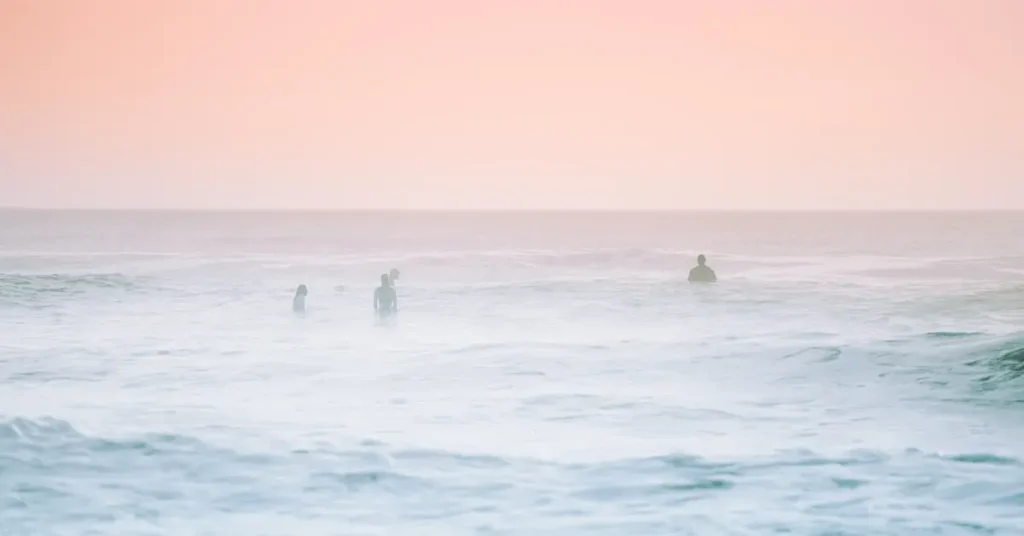
Not every natural experience needs to involve remote wetlands or wildlife trails. Cocoa Beach offers a more traditional coastal experience, with sandy beaches, Atlantic surf and the familiar atmosphere of a Florida beach town. The Cocoa Beach Pier provides an excellent landmark overlooking the ocean, while the surrounding coastline attracts surfers, shorebirds and occasional dolphins.
The area is particularly well suited to families, with several oceanfront parks offering picnic areas, convenient beach access and recreational facilities. Sidney Fischer Park is a popular choice, with picnic pavilions and a children’s playground, while Lori Wilson Park offers nature trails and a designated dog park. Visitors traveling with pets can also find designated dog-friendly beach areas, although restrictions vary by location.
The area has a long connection with Florida’s surfing culture, making it an interesting destination for visitors wanting to combine time outdoors with a little local character. It provides a useful contrast to the quieter natural environments elsewhere on the Space Coast.
7. Sebastian Inlet: Where Natural Beauty Meets Shipwreck History
At the southern end of the Space Coast, Sebastian Inlet offers a fascinating combination of coastal scenery, outdoor recreation and maritime history, with opportunities for fishing and surfing.
Its most unusual historical attraction is the McLarty Treasure Museum, located at the site of a survivors’ and salvagers’ camp associated with the 1715 Spanish Plate Fleet disaster. In July 1715, a hurricane struck a fleet of Spanish ships returning from the Americas, scattering valuable cargo along Florida’s coastline. The disaster brought shipwreck survivors and later treasure salvagers to this stretch of coast.
Today, the museum displays artifacts and explains the history of the wrecks and subsequent recovery efforts. It is an unexpected historical connection within a park better known for its beaches and fishing.
Sebastian Inlet is also a worthwhile destination for families, combining opportunities to explore local history with outdoor activities, wildlife observation and picnicking. Dogs are permitted in designated areas of the park and campground, but are not allowed on the beaches.
Visiting: The park operates around the clock, although individual facilities have separate hours. As of November 2026, the north jetty is temporarily closed and bridge construction is affecting access, including beach access from the south side. Check current park announcements before traveling.
Beyond the Launch Pads: Space Coast Natural Attractions
Perhaps the most unexpected thing about Florida’s Space Coast is that its connection with space exploration helped preserve a remarkable natural landscape. The same region that sends spacecraft into orbit protects ancient coastal monuments, important wildlife habitats and waterways where microscopic organisms create their own extraordinary light displays.
At Merritt Island, the contrast is particularly striking. A landscape acquired for America’s journey to the Moon became an important sanctuary for Florida’s wildlife. It is a reminder that some of the most interesting discoveries along this coastline are not found in the visitor centers or launch facilities, but in the extraordinary natural world just beyond them.
- 1. Merritt Island: The Wildlife Refuge Born from the Space Race
- 2. Canaveral National Seashore: Ancient Monuments Overlooking the Lagoon
- 3. Indian River Lagoon: One of America's Remarkable Estuaries
- 4. Bioluminescent Kayaking: Florida's Glowing Waterways
- 5. Enchanted Forest Sanctuary: Florida Before Development
- 6. Cocoa Beach: A Different Side of the Atlantic Coast
- 7. Sebastian Inlet: Where Natural Beauty Meets Shipwreck History
- Beyond the Launch Pads: Space Coast Natural Attractions


