

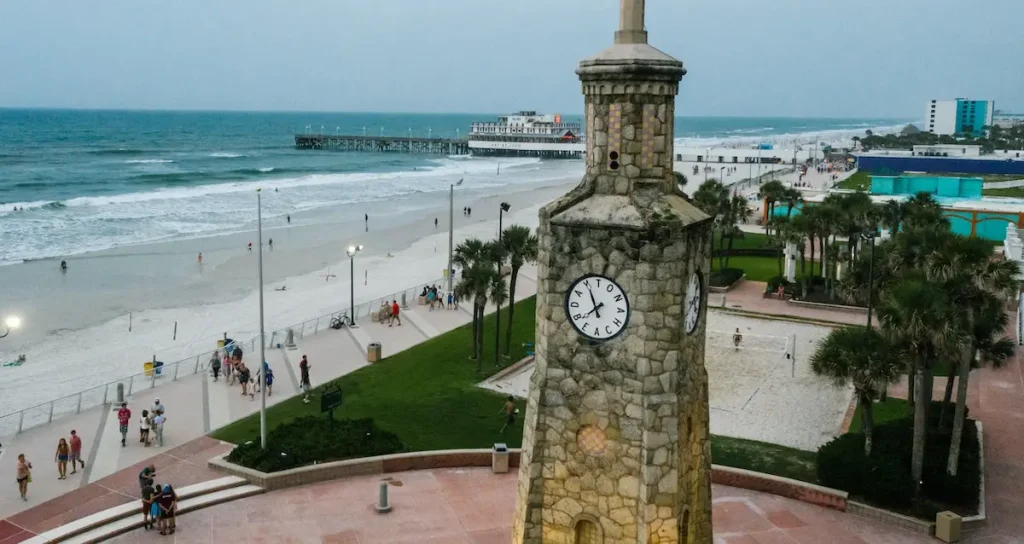

Florida’s Fun Coast has a many family-friendly activities for those who look beyond its famous Atlantic beaches. Children can discover how injured sea turtles are rescued, walk through the landscape of an ancient Native American settlement, climb a historic lighthouse, or find themselves standing inside one of the world’s most famous motor racing circuits.
Stretching along the Atlantic coastline around Flagler Beach, Ormond Beach, Daytona Beach, and Ponce Inlet, this part of Florida offers considerably more than a traditional beach holiday.
There are opportunities to explore wildlife habitats, paddle historic waterways, discover fascinating pieces of Florida history, and enjoy attractions designed for families looking for something a little different. Here are seven worthwhile experiences that reveal another side of Florida’s Fun Coast.
1. Meet Florida’s Marine Wildlife at the Marine Science Center in Ponce Inlet

Some of the most memorable family experiences involve discovering something that children might never otherwise encounter. At the Marine Science Center in Ponce Inlet, visitors can learn about Florida’s coastal wildlife while seeing the important work involved in rescuing and rehabilitating injured marine animals.
The center features aquariums, interactive exhibits, a teaching laboratory, and opportunities to learn about the ecosystems found along Volusia County’s coastline. One particularly interesting attraction is the rehabilitation hospital, where sick and injured sea turtles and seabirds receive treatment. Visitors can observe some of the animals undergoing rehabilitation and discover the challenges involved in returning wildlife to its natural environment.
The touch pool provides another opportunity for children to get closer to marine life, while the nature trail and observation tower offer a chance to explore the surrounding coastal landscape. It is an especially worthwhile visit because the experience goes beyond simply looking at marine animals. Children discover why sea turtles need protection, how coastal ecosystems work, and what happens when wildlife becomes injured. For families, it is an enjoyable introduction to marine conservation that can make a subsequent visit to the beach considerably more interesting.
2. Walk Through Thousands of Years of History at Tomoka State Park in Ormond Beach
Tomoka State Park in Ormond Beach is one of the Fun Coast’s most interesting natural destinations, but its greatest surprise may be its archaeological history. The park protects an extensive natural landscape of hardwood hammocks, salt marshes, tidal waterways, and riverfront habitats. Kayaking and canoeing along the Tomoka River provide opportunities to observe birds and other wildlife, while the park’s picnic areas and nature trail offer more relaxed ways to explore.
However, there is a fascinating story beneath this landscape. The area was once home to Nocoroco, a Timucuan village situated near the meeting of the Tomoka and Halifax rivers. Spanish explorer Alvaro Mexia recorded information about the village during his exploration of the region in 1605. The location was particularly suitable for settlement because its waterways provided access to fish, shellfish, and other natural resources.
Evidence of the area’s much older occupation can also be found in the Tomoka Mound Complex. Archaeological research suggests that parts of this landscape were occupied as early as 5000 BC.
Visitors can follow the half-mile Tomoka Trail through the hardwood hammock and past the Nocoroco village site. The village itself no longer survives, but the surrounding archaeological landscape and shell deposits provide reminders of the people who lived here long before Florida became a popular holiday destination.
The park also has a later British colonial history. Richard Oswald established Mount Oswald Plantation here in the eighteenth century, using enslaved Africans to produce crops including indigo, rice, and sugar. It is a remarkable amount of history for a place that many visitors might initially regard simply as a scenic spot for kayaking. Tomoka State Park combines outdoor recreation with an opportunity for families to introduce children to the very different chapters of Florida’s past.
Pet-Friendly Tip: Tomoka State Park welcomes dogs in permitted outdoor areas, including designated trails and picnic areas. Pets must remain on a leash no longer than six feet and cannot enter designated swimming areas, playgrounds or park buildings.
3. Discover the Coastal Wilderness of Smyrna Dunes Park in New Smyrna Beach
Not every memorable family adventure needs to involve a major attraction. Smyrna Dunes Park in New Smyrna Beach offers a different kind of experience: an opportunity to explore one of the region’s distinctive coastal environments.
Located near the southern end of Ponce Inlet, this 184-acre park is surrounded by the Atlantic Ocean, the inlet, and the Indian River. Its most distinctive feature is a network of elevated boardwalks extending for more than two miles through the natural landscape. The walkways provide access to scenic viewpoints and make it possible to explore the coastal environment without wandering through sensitive dune habitats.
Families can look for shorebirds, observe the changing coastal landscape, enjoy the ocean views, and discover the different environments found around the inlet. There is also a fishing pier, picnic facilities, and opportunities to enjoy the surrounding shoreline.
The boardwalks make this an especially appealing destination for families who enjoy walking and wildlife watching. They also provide a different perspective on Florida’s coastal landscape from the familiar experience of spending an afternoon on the beach. It is worth remembering that this is a natural park rather than a conventional recreational beach, so visitors should respect wildlife and stay on designated walkways.
Pet-Friendly Tip: Smyrna Dunes Park is also an excellent choice for families traveling with dogs. Designated areas along the inlet and river shoreline welcome leashed pets, making it possible to enjoy the coastal scenery together. Dogs must remain on a leash no longer than six feet, and restrictions apply in certain wildlife areas and elsewhere in the park.
4. Experience the Excitement of Daytona International Speedway in Daytona Beach
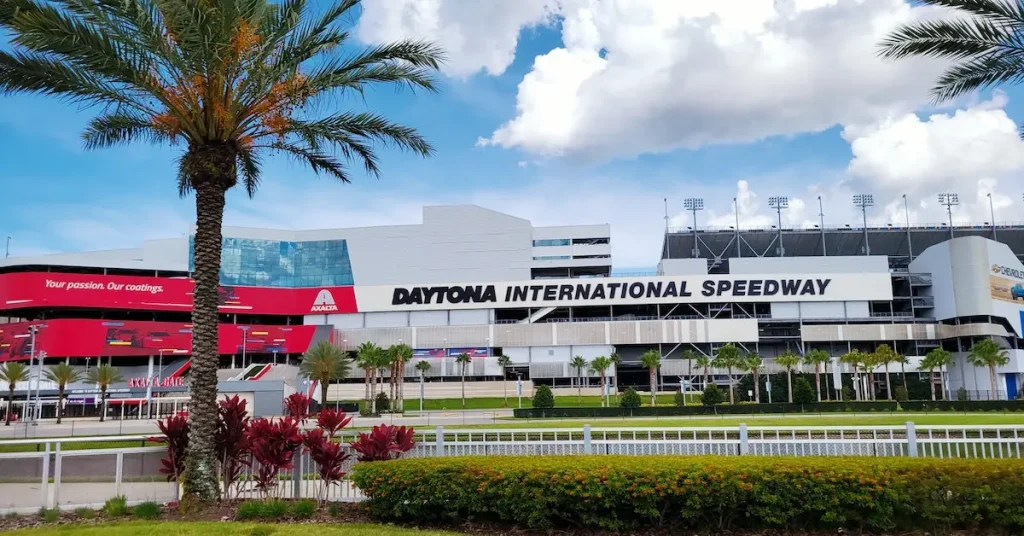
Daytona Beach is internationally associated with motor racing, and families do not need to attend a major race to experience the excitement of its famous speedway. Daytona International Speedway, home of the Daytona 500, offers guided tours that take visitors behind the scenes of one of motorsports’ most recognizable venues. The approximately 60-minute Speedway Tour provides an opportunity to explore the infield, visit pit road when operational conditions permit, and experience the circuit’s remarkable 31-degree banking.
For children interested in cars, racing, or engineering, it is an opportunity to see the scale of a professional racing facility from a completely different perspective. Another attraction is the Motorsports Hall of Fame of America, which is included with the standard Speedway Tour.
Its exhibits cover a surprisingly broad range of motorsports, including stock car racing, motorcycles, drag racing, powerboating, aviation, and land-speed records. This makes the experience interesting even for visitors whose knowledge of racing begins and ends with the Daytona 500.
Tour availability and routes can change around major events, so checking the official calendar before visiting is advisable.
5. Climb One of Florida’s Most Remarkable Historic Lighthouses in Ponce Inlet
The Ponce de Leon Inlet Lighthouse is one of the most impressive historic landmarks along Florida’s Atlantic coastline. Completed in 1887, the lighthouse rises approximately 175 feet above the surrounding landscape, making it one of the tallest lighthouses in the United States. This family-friendly attraction offers much more than an opportunity to admire an impressive historic building.
Visitors can climb the lighthouse tower, explore the museum buildings, and discover how lighthouse keepers once maintained these essential maritime navigation facilities. The museum’s collections help explain the importance of coastal navigation, the dangers faced by ships traveling along Florida’s Atlantic coast, and the lives of the people responsible for keeping the light operating.
The climb is particularly rewarding for older children and adults who enjoy a little physical activity alongside their history. The lighthouse is also an excellent starting point for exploring other nearby attractions, including the Marine Science Center and Lighthouse Point Park.
Pet-Friendly Tip: Lighthouse Point Park is another good option for visitors with dogs. Pets are permitted on the inlet-side beach but are not allowed on the Atlantic Ocean beach. There are also restrictions on access to elevated boardwalks after 10 a.m., so check the posted signs before exploring.
6. Enjoy a Day of Water Park and Family Entertainment at Daytona Lagoon in Daytona Beach
Sometimes the best family holiday experiences involve nothing more complicated than a day of water slides, swimming, and games. Daytona Lagoon provides exactly that, combining a water park with a collection of indoor and outdoor entertainment attractions. The water park features slides, a wave pool, a lazy river, and the Castaway Children’s Play Area, which is particularly suitable for younger visitors.
For those looking for family-friendly activities away from the water can also enjoy go-karts, mini golf, laser tag, arcade games, bumper cars, and other attractions. The advantage is having several different activities in one location, making it easier to accommodate children with different interests and ages.
Daytona Lagoon is particularly useful as an alternative to a beach day, although its water park operates seasonally and the various attractions have different operating schedules. Check the official operating calendar before setting out, particularly if your visit falls outside the main summer season.
7. Step Back Into Florida’s Colonial History in St. Augustine: An optional day trip north of the Fun Coast
Families with additional time can consider a trip to St. Augustine, where Florida’s history takes on an entirely different character. The city’s most impressive historic attraction is Castillo de San Marcos, the Spanish fortress overlooking Matanzas Bay.
Construction began in 1672, and the remarkable stone fortification was designed to defend the Spanish settlement against attacks from rival European powers. Its coquina walls are particularly interesting. Coquina is a local limestone made from compressed shell fragments, giving the fortress a distinctive appearance.
Children can explore the fort’s rooms, walk along its defensive walls, and learn about the soldiers who once guarded this strategically important settlement. The National Park Service also offers historical interpretation and occasional demonstrations that help bring the fortress’s military history to life.
Another family attraction is the St. Augustine Alligator Farm Zoological Park, where visitors can encounter alligators, crocodiles, birds, and other wildlife.
The historic district is also worth exploring, particularly its old streets and distinctive architecture.
St. Augustine is roughly an hour’s drive north of Daytona Beach, depending on traffic, making it a practical excursion for families spending several days on the Fun Coast.
Making the Most of a Family Visit to Florida’s Fun Coast
One of the advantages of exploring the Fun Coast is the variety of experiences available within a relatively compact coastal region. Families can combine a morning at the Marine Science Center with an afternoon at the lighthouse, or spend a day exploring Tomoka State Park before returning to the beach.
A little planning will make the experience easier.
- Allow time for outdoor activities. Florida’s heat and afternoon thunderstorms can affect how comfortable it is to explore parks and waterways.
- Check attraction schedules. Marine Science Center visits, lighthouse admissions, and Speedway tours all have operating arrangements worth checking in advance.
- Consider the children’s ages. Some experiences, particularly lighthouse climbs and water park attractions, may be better suited to older children.
- Plan around geography. Ponce Inlet‘s lighthouse, Marine Science Center, and Lighthouse Point Park are close enough to combine into one outing. Tomoka State Park and Daytona Beach attractions work well as separate excursions.
- Respect the natural environment. Keep to designated trails and boardwalks, observe wildlife from a suitable distance, and follow swimming and boating safety advice.
Beyond the Beach, There Is Another Side to the Fun Coast
The most interesting thing about Florida’s Fun Coast is how much variety lies behind its familiar beach-town reputation. A family can spend one day learning about injured sea turtles, another exploring the landscape of a settlement that existed centuries before European colonization, and another standing on the steep banking of a world-famous motor racing circuit.
There are few coastal destinations where marine conservation, ancient archaeology, maritime history, and international motorsports sit so close together. And that is perhaps the real attraction of the Fun Coast. The beaches may bring visitors here, but the family-friendly activities and discoveries waiting beyond the shoreline can make the holiday considerably more memorable.
- 1. Meet Florida's Marine Wildlife at the Marine Science Center in Ponce Inlet
- 2. Walk Through Thousands of Years of History at Tomoka State Park in Ormond Beach
- 3. Discover the Coastal Wilderness of Smyrna Dunes Park in New Smyrna Beach
- 4. Experience the Excitement of Daytona International Speedway in Daytona Beach
- 5. Climb One of Florida's Most Remarkable Historic Lighthouses in Ponce Inlet
- 6. Enjoy a Day of Water Park and Family Entertainment at Daytona Lagoon in Daytona Beach
- 7. Step Back Into Florida's Colonial History in St. Augustine: An optional day trip north of the Fun Coast
- Making the Most of a Family Visit to Florida's Fun Coast
- Beyond the Beach, There Is Another Side to the Fun Coast


