


Long before luxury spa resorts and beachfront wellness retreats, visitors traveled to Florida in search of restorative waters. From St. Augustine‘s legendary Fountain of Youth to forgotten mineral-water resorts, unusual natural springs and an extraordinary swimming pool carved from a coral-rock quarry, the Sunshine State has a fascinating history of people seeking relaxation and rejuvenation.
Florida and the enduring search for the Fountain of Youth
Few legends are more closely associated with Florida than the search for the Fountain of Youth. According to popular tradition, Spanish explorer Juan Ponce de León arrived in Florida in 1513 searching for a magical spring whose waters could restore youth. The story has been repeated for centuries, and visitors can still drink from the spring at the Fountain of Youth Archaeological Park in St. Augustine.
There is, however, an important historical distinction. Historians have found no contemporary evidence that Ponce de León was searching for eternal youth. His expedition was concerned with exploration, territorial claims and opportunities for Spanish expansion. The association with the Fountain of Youth appeared in later historical accounts, including a particularly unflattering account written by Spanish chronicler Gonzalo Fernández de Oviedo in 1535, more than a decade after Ponce de León’s death. Nevertheless, the legend became an enduring part of Florida’s identity.

The attraction is also interesting for reasons extending beyond the famous spring. Archaeological investigations at the site have uncovered evidence of a pre-European Timucua settlement, as well as material associated with early Spanish occupation. The exact interpretation of some archaeological features remains debated, but the discoveries make the location an important place for exploring St. Augustine‘s early history.
Today, visitors can explore the waterfront grounds, historical exhibits and reconstructed structures, and sample the spring water themselves. The park is open daily from 9 a.m. to 6 p.m., with admission charged. It is also dog-friendly, although visitors should check the attraction’s current rules before bringing their pets. Children can enjoy the historical exhibits, grounds and roaming peacocks.
The Fountain of Youth may be a legend, but it provides a fascinating starting point for exploring Florida’s centuries-old relationship with the idea of rejuvenation.
Green Cove Springs: Florida’s forgotten mineral-water resort
South of Jacksonville, the small community of Green Cove Springs offers one of the most interesting forgotten chapters in Florida’s wellness history. During the nineteenth century, its mineral spring attracted visitors who believed the water possessed health-giving properties. The settlement was originally known as White Sulfur Springs, and its reputation eventually earned it the nickname the Saratoga of the South, after the famous New York resort town associated with mineral-water bathing.
River steamers brought visitors along the St. Johns River, where hotels and boarding houses catered to people hoping to benefit from the spring waters. According to Florida’s historical marker, tourism eventually became more important to the local economy than citrus growing and lumbering. The town’s hotels were said to rival those found in northern resort destinations.
It is an extraordinary reminder that Florida was attracting health-conscious visitors long before the modern spa industry developed. The spring remains an important part of the town’s identity. Today, visitors can explore Spring Park beside the St. Johns River and see the setting that once attracted nineteenth-century travelers.
The adjacent municipal swimming pool provides a more conventional recreational experience during its seasonal operating period, although it should not be confused with swimming in the historic mineral spring. The municipal pool operates seasonally, typically closing during the cooler months and reopening in spring. The park and waterfront are worth visiting even when the pool is closed, particularly for anyone interested in Florida’s forgotten resort history.
De Leon Springs: The Fountain of Youth with an unexpected visitor
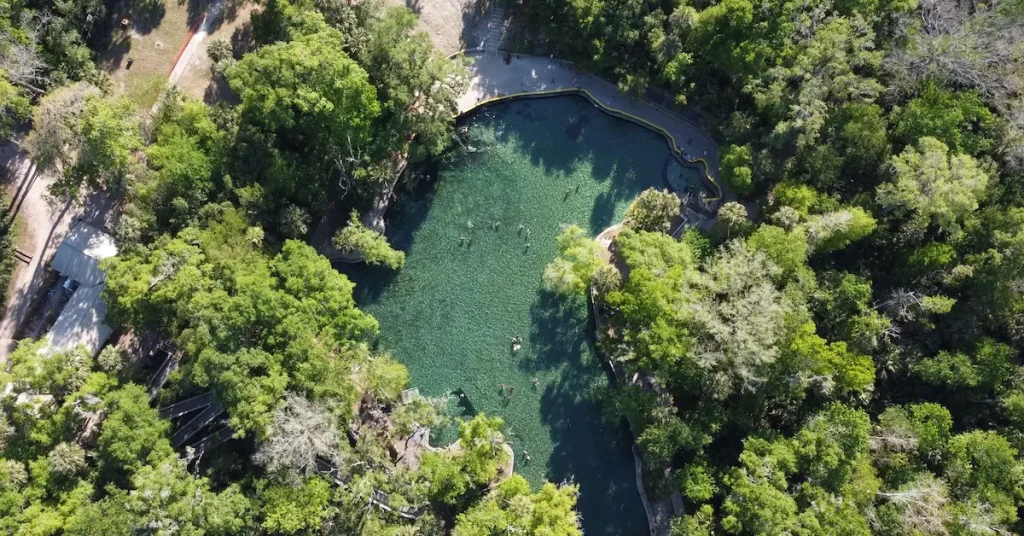
An inland excursion from Daytona Beach leads to De Leon Springs State Park, a destination with an unusually rich history. The spring was known to the Mayaca people as Acuera, meaning Healing Waters. For thousands of years, it provided water, food and access to the surrounding waterways. Its later history includes plantations, sugar production, tourism and one of Florida’s more unusual roadside attractions.
In the nineteenth century, the property was known as Spring Garden. A water-powered sugar mill was constructed here in 1832, and some of its historic machinery and brickwork can still be seen. The area eventually became a tourist destination, and its name was changed to Ponce de Leon Springs to capitalize on the growing popularity of the Fountain of Youth legend.
A 14-room hotel opened in 1925, catering particularly to wealthier visitors arriving from the North. But the most memorable chapter came during Florida’s roadside-attraction boom of the 1950s and 1960s. The property became an entertainment attraction featuring tropical gardens, a jungle cruise, tram tours and even a water-skiing elephant named Queenie. The attraction eventually closed, but its history has not been forgotten. Florida State Parks preserves historical photographs, including one showing Queenie performing on the water.
Today, visitors can swim in the spring’s clear 72-degree water, explore the nature trails and learn about the property’s remarkable past in the visitor centre. The swimming area ranges from shallow water to depths of approximately 30 feet, and there are no lifeguards. Children and inexperienced swimmers should remain in designated areas and be supervised. Dogs are permitted in designated park areas on a six-foot leash, but not in the sunbathing area. For families, it is a particularly worthwhile excursion, combining a refreshing swim with an opportunity to discover one of Florida’s strangest tourist attractions.
Green Springs: One of Florida’s earliest health spas
Near Enterprise, approximately 30 miles west of Daytona Beach and 30-35 miles northeast of Orlando, lies Green Springs Park. It is one of Florida’s few remaining green sulfur springs, and its unusually colored water makes it quite different from the familiar crystal-clear springs found elsewhere in the state. Its history is particularly relevant to our story.
In 1841, Cornelius Taylor constructed a hotel beside the spring, which became the principal attraction of his lakeside establishment. Described as a hotel for invalids, it attracted visitors hoping to benefit from the sulfur-rich water. It was effectively one of Florida’s earliest health spas. By 1883, the property had become part of the estate of Frederick deBary, a wealthy wine importer and steamboat entrepreneur who entertained guests from his nearby DeBary Hall estate. Visitors continued to be attracted by the spring’s unusual green waters well into the twentieth century.
Today, Green Springs is a 31-acre public nature park managed by Volusia County. Visitors can admire the spring from scenic overlooks, follow the walking trails and enjoy the surrounding natural landscape. There are picnic pavilions and a children’s playground, making it a pleasant family outing. There is one important distinction: swimming and fishing are prohibited. The attraction is the unusual spring itself and its historical setting, rather than an opportunity to enter the water. Admission is free, and the park is open daily from sunrise to sunset. Dogs are permitted in Volusia County parks, including Green Springs, provided they remain leashed and under control.
Blue Spring: A natural refuge for Florida’s winter visitors
Another worthwhile inland excursion located approximately 40-45 miles west of Daytona Beach is Blue Spring State Park. The spring maintains a temperature of approximately 72 degrees Fahrenheit throughout the year. During winter, when surrounding waterways become colder, manatees gather in the warmer spring run. The sight of these enormous animals gathering in the clear water has become one of the area’s most remarkable natural spectacles.
Conservation efforts have played an important role in protecting the manatee population. In 2023, the park recorded an extraordinary count of 729 manatees using the spring. Visitors can observe them from an elevated boardwalk without entering the water or disturbing the animals.
The park also has a historic connection through the Thursby House, a nineteenth-century building reflecting the area’s earlier settlement and river-trading history. Swimming is normally permitted between April 1 and November 14, subject to manatee conditions. During winter manatee season, swimming and other water activities are prohibited in the spring run to protect the animals.
There is an important practical detail for families: the boardwalk offers excellent wildlife viewing, but pets are not permitted on boardwalks, in playgrounds or swimming areas. Dogs can accompany visitors in permitted outdoor areas of the park on a leash.
Blue Spring is not a traditional wellness destination, but spending time beside its remarkable natural waters offers a rather different way to slow down and appreciate Florida’s environment.
Venetian Pool: A Mediterranean swimming paradise in Miami
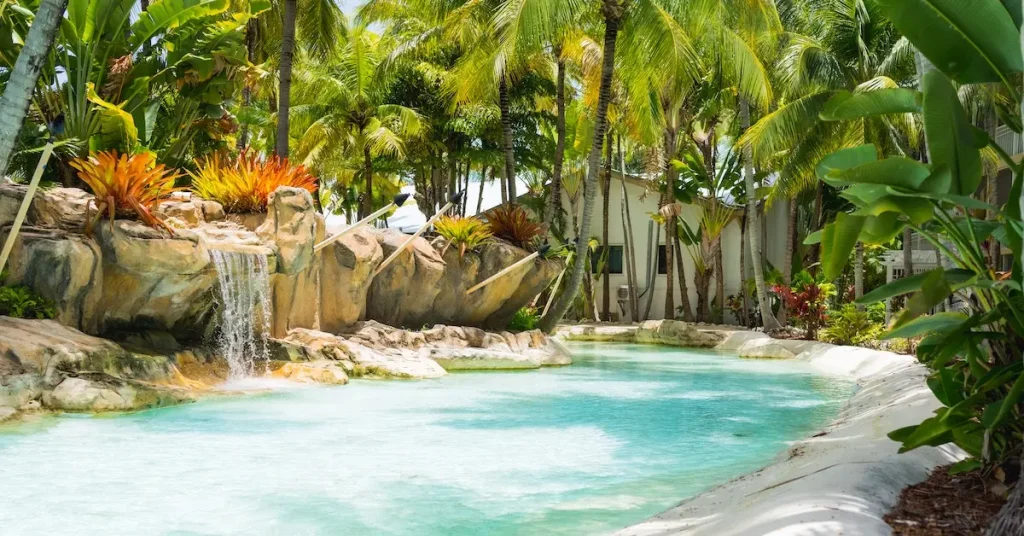
Our journey ends in South Florida at one of the state’s most extraordinary swimming destinations: Venetian Pool. Created from an abandoned coral-rock quarry, the pool opened in 1924 as part of George Merrick’s ambitious plans for Coral Gables near Miami. The original quarry supplied limestone for the construction of the developing city. Rather than simply abandoning the excavation, Merrick and his collaborators transformed it into a spectacular swimming attraction.
Designed by architect Phineas Paist and artist Denman Fink, the pool incorporated Mediterranean and Venetian influences, including waterfalls, grottos, bridges and decorative architectural details. Originally known as the Venetian Casino, it became a fashionable destination, attracting prominent visitors and even Hollywood personalities. The pool has also hosted orchestra performances. On some occasions, it was emptied so musicians could perform on the pool floor, an unusual use for a swimming attraction.
Today, Venetian Pool remains a remarkable example of historic recreational architecture and is listed on the National Register of Historic Places. Its water comes from the Biscayne Bay aquifer, with approximately 820,000 gallons drained and replenished daily. Visitors can enjoy the waterfalls, grottos and unusual surroundings, although this is a public swimming facility rather than a conventional spa.
Admission is charged. Children must be at least three years old and 38 inches tall to enter, and pets are not permitted, except qualifying service animals. The pool normally operates Tuesday through Sunday, although schedules and maintenance closures should be checked before visiting. It is a fascinating final stop because it demonstrates that Florida’s relationship with water and recreation has also produced some extraordinary architecture.
The search for rejuvenation never really ended
Florida’s relationship with restorative waters has passed through several very different eras. In the nineteenth century, visitors traveled by steamboat to Green Cove Springs hoping to benefit from its mineral waters. At Green Springs, an early hotel catered to people seeking relief from illness. Later generations arrived at De Leon Springs to enjoy swimming, tropical gardens and even the extraordinary spectacle of a water-skiing elephant.
Today, people still seek out Florida’s springs, historic pools and peaceful waterfront destinations, although the reasons have changed. There may never have been a Fountain of Youth, and the healing properties of mineral waters belong largely to the beliefs of earlier generations. But the places themselves remain, preserving an intriguing part of Florida’s history.
Perhaps the most interesting thing about the old search for rejuvenation is that it left behind something more enduring than the promise of eternal youth: a collection of unusual places where Florida’s natural beauty, history and love of the water come together.
- Florida and the enduring search for the Fountain of Youth
- Green Cove Springs: Florida's forgotten mineral-water resort
- De Leon Springs: The Fountain of Youth with an unexpected visitor
- Green Springs: One of Florida's earliest health spas
- Blue Spring: A natural refuge for Florida's winter visitors
- Venetian Pool: A Mediterranean swimming paradise in Miami
- The search for rejuvenation never really ended


