


From a fortress built of seashells to an unfinished military stronghold surrounded by wildlife, Florida’s First Coast offers some fascinating discoveries for families, history and nature lovers.
What do a fortress that absorbed cannonballs, a military stronghold that was never completed and a wildlife sanctuary in the middle of Florida’s largest city have in common? They are all part of Florida’s First Coast, a region where remarkable historical stories and unexpected natural experiences are often found surprisingly close together.
Stretching from Jacksonville to Amelia Island and St. Augustine, Northeast Florida offers much more than beautiful beaches and traditional family attractions. Its history reaches back centuries, while its forests, waterways and coastal landscapes provide opportunities to experience some of the region’s remarkable natural environments.
Here are three places where history and nature come together in particularly interesting ways.

1. Castillo de San Marcos: The Fortress Built from Seashells
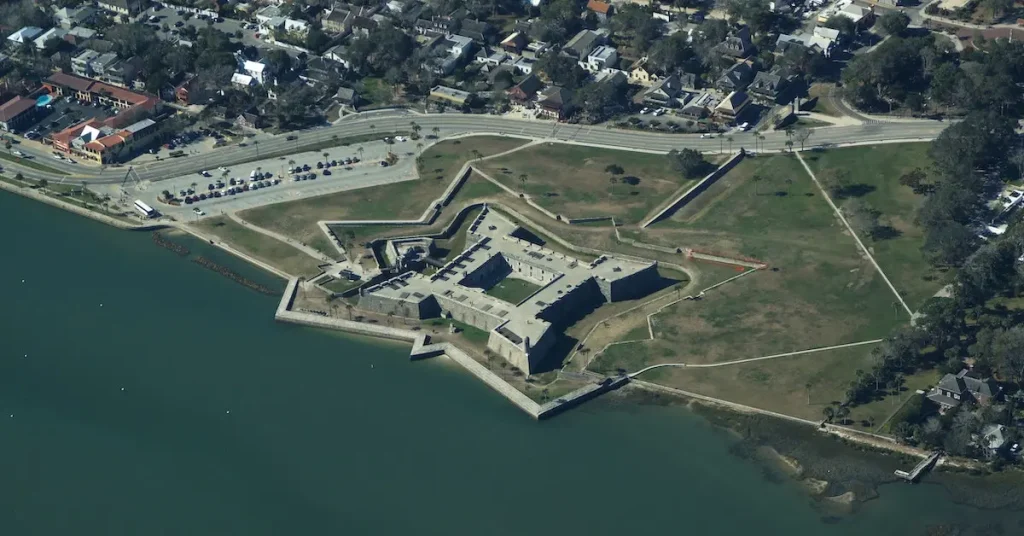
St. Augustine‘s Castillo de San Marcos is one of Florida’s most recognizable historic landmarks. But there is something rather extraordinary about the material used to build it. The massive fortress was constructed from coquina, a natural limestone made largely from compacted seashells. At first glance, it might seem an unlikely material for a military stronghold designed to withstand cannon fire. Construction began in 1672, and the fortress took 23 years to complete. Its builders soon discovered that the unusual stone had an unexpected advantage.
During the English attack on St. Augustine in 1702, cannonballs struck the fortress walls but did not produce the devastating damage that might have been expected. Instead, the relatively soft, porous coquina absorbed much of the impact. Cannonballs could become embedded in the walls rather than shattering the stone into dangerous fragments. The fortress survived, and it subsequently withstood another major English siege in 1740, when General James Oglethorpe’s forces bombarded St. Augustine for 27 days.
Today, visitors can walk through the fortress, explore its rooms and defensive positions, examine the cannons and enjoy impressive views across Matanzas Bay. The architecture itself is fascinating, with its distinctive four bastions and substantial walls offering a glimpse into the military engineering of Spanish colonial Florida.
For families, the fortress provides an opportunity to bring history to life. Children can explore the defensive structure, discover how soldiers lived and learn about the conflicts that shaped the region. Ranger programs and historical demonstrations add further interest when scheduled. The surrounding grounds are also worth exploring, particularly for visitors interested in the city’s historic waterfront.
Visitor information: Castillo de San Marcos is operated by the National Park Service and is generally open daily, except Thanksgiving and Christmas. Leashed dogs are permitted on the exterior grounds but cannot enter the fortress itself.
2. Jacksonville: Wildlife Discoveries in Florida’s Largest City
Jacksonville is Florida’s largest city by land area, but its appeal extends well beyond its urban attractions. One of the most interesting family destinations is Jacksonville Zoo and Gardens, where visitors can encounter wildlife from around the world while exploring landscaped gardens and naturalistic animal habitats.

The attraction offers a very different experience from simply looking at animals in traditional zoo enclosures. Its exhibits introduce visitors to different ecosystems and the wildlife that inhabits them. For children, seeing animals at close quarters can be an enjoyable introduction to conservation, biodiversity and the natural world. Interactive experiences, animal encounters and educational opportunities make the visit particularly worthwhile for families. The zoo also offers attractions such as its wildlife carousel and train, providing additional entertainment for younger visitors.
However, Jacksonville‘s natural attractions are not confined to the zoo. The city is surrounded by waterways, wetlands and coastal habitats, making it an interesting destination for anyone wanting to discover Florida’s wildlife. The St. Johns River, in particular, provides an important part of Jacksonville‘s identity and landscape.
Visitors can enjoy waterfront walks, river views and opportunities to observe the changing relationship between the city and its natural surroundings. For those interested in combining urban sightseeing with outdoor exploration, Jacksonville offers an appealing contrast.
Visitor information: Jacksonville Zoo and Gardens is located at 370 Zoo Parkway and is generally open daily from 9 a.m. to 5 p.m. Online tickets are required, so check the official website before visiting. Pets are not permitted, although qualifying trained service animals are allowed.
3. Fort Clinch State Park: The Military Fortress That Was Never Finished
On the northern tip of Amelia Island, Fort Clinch State Park offers one of the most interesting combinations of military history and natural scenery on Florida’s First Coast. The impressive brick fortress overlooks the entrance to the St. Marys River, an important strategic waterway separating Florida and Georgia.
Construction began in 1847 as part of a wider program to strengthen America’s coastal defense. But the fort’s story took an unexpected turn. When the Civil War began in 1861, only around two-thirds of the planned structure had been completed. Its cannons had not even been mounted on the walls. The Confederates initially took control of the area, but Union forces occupied Amelia Island in 1862. Further construction work followed, although the fort was never completed as originally intended. It subsequently returned to military use during the Spanish-American War and World War II.
Today, Fort Clinch is one of the best-preserved examples of a 19th-century coastal fortification in Florida. Visitors can explore its rooms, galleries, defensive walls and military displays. Living-history programs, particularly the monthly soldier garrison demonstrations, offer an opportunity to see aspects of military life recreated.
But the fort is only part of the attraction. The surrounding state park covers approximately 1,400 acres, with maritime forests, coastal dunes, beaches and wildlife habitats. Walking trails provide opportunities to discover the natural side of Amelia Island, while the park’s beaches are popular for fishing, shelling and beachcombing. Look out for gopher tortoises and colorful painted buntings, among the wildlife found in the park.
One particularly interesting activity is searching the beaches for fossilized shark teeth, a reminder of the prehistoric marine life that once inhabited these waters. Families will appreciate the combination of history and outdoor activities, with a playground, picnic facilities and opportunities for wildlife observation. Fort Clinch is also a good option for visitors traveling with dogs. Leashed dogs are welcome on the park’s nature trails, hiking trails, park drive and camping areas. However, they are not permitted inside the fort, on boardwalks or on the beach.
Visitor information: Fort Clinch State Park is located at 2601 Atlantic Avenue in Fernandina Beach. The park is open daily from 8 a.m. until sunset, while the historic fort is generally open from 9 a.m. to 5 p.m. There is a separate admission charge for the fort.
Three Places, Three Different Stories
Florida’s First Coast offers plenty of opportunities to combine a family outing with something genuinely interesting. At St. Augustine, an extraordinary building material helped a Spanish fortress survive repeated attacks. In Jacksonville, wildlife and botanical discoveries provide a different perspective on Florida’s largest city. And on Amelia Island, an unfinished military fort stands as a reminder of a turbulent period in American history, surrounded by one of Northeast Florida’s most attractive natural landscapes.
What makes these destinations particularly interesting is that none requires visitors to choose between history and nature. You can explore a centuries-old fortress, discover wildlife in an urban setting or walk through a military stronghold before heading out into a coastal forest. Sometimes the most memorable Florida experiences are found where the stories of the past and the natural world meet.


